
Last updated November 23, 2026
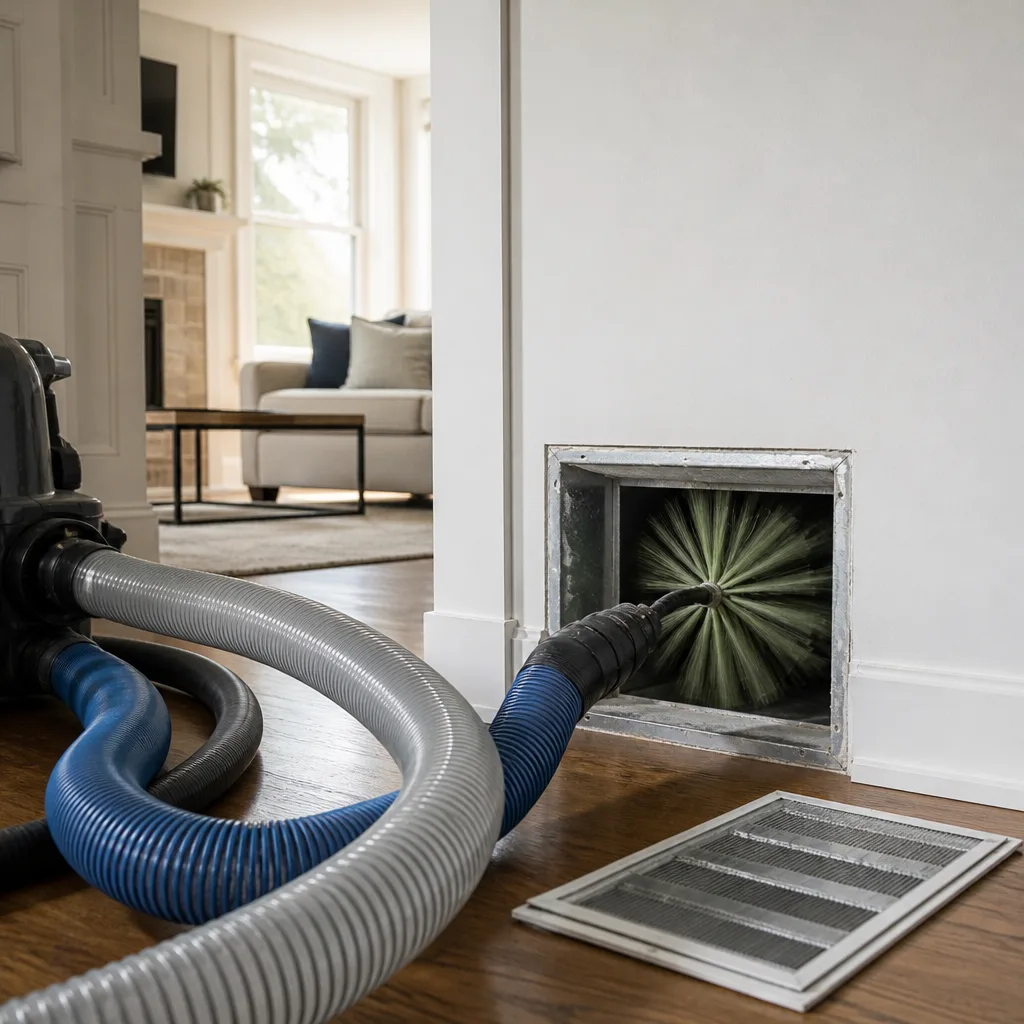 Whole-home duct cleaning
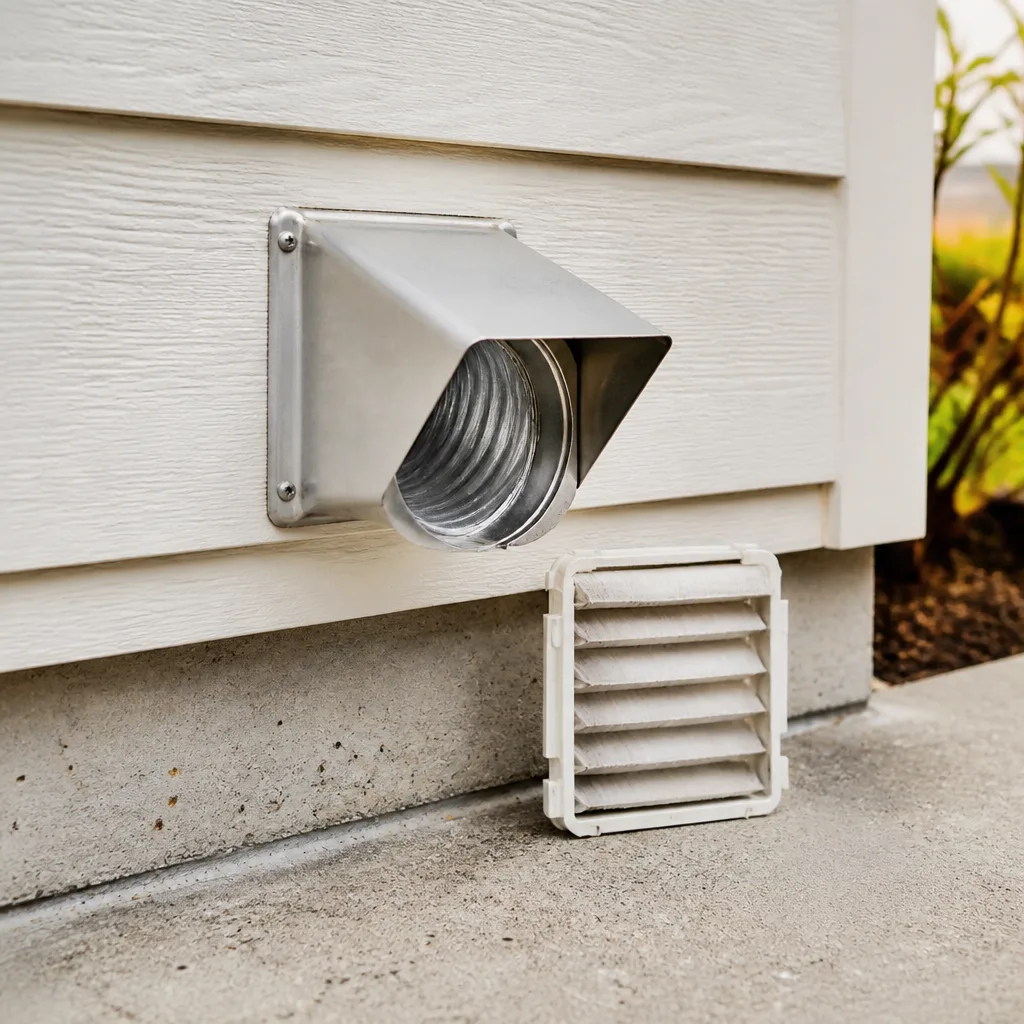 Dryer vent cleaning
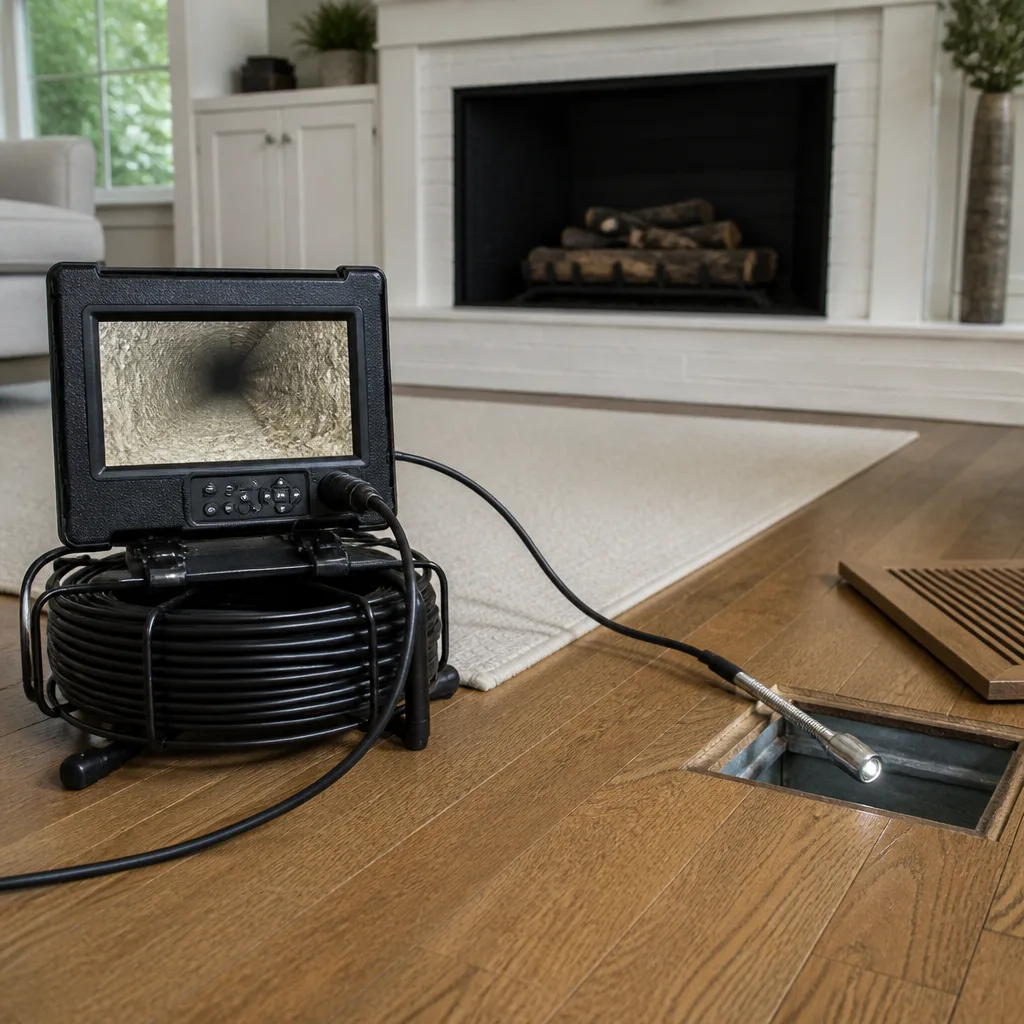 Camera inspection
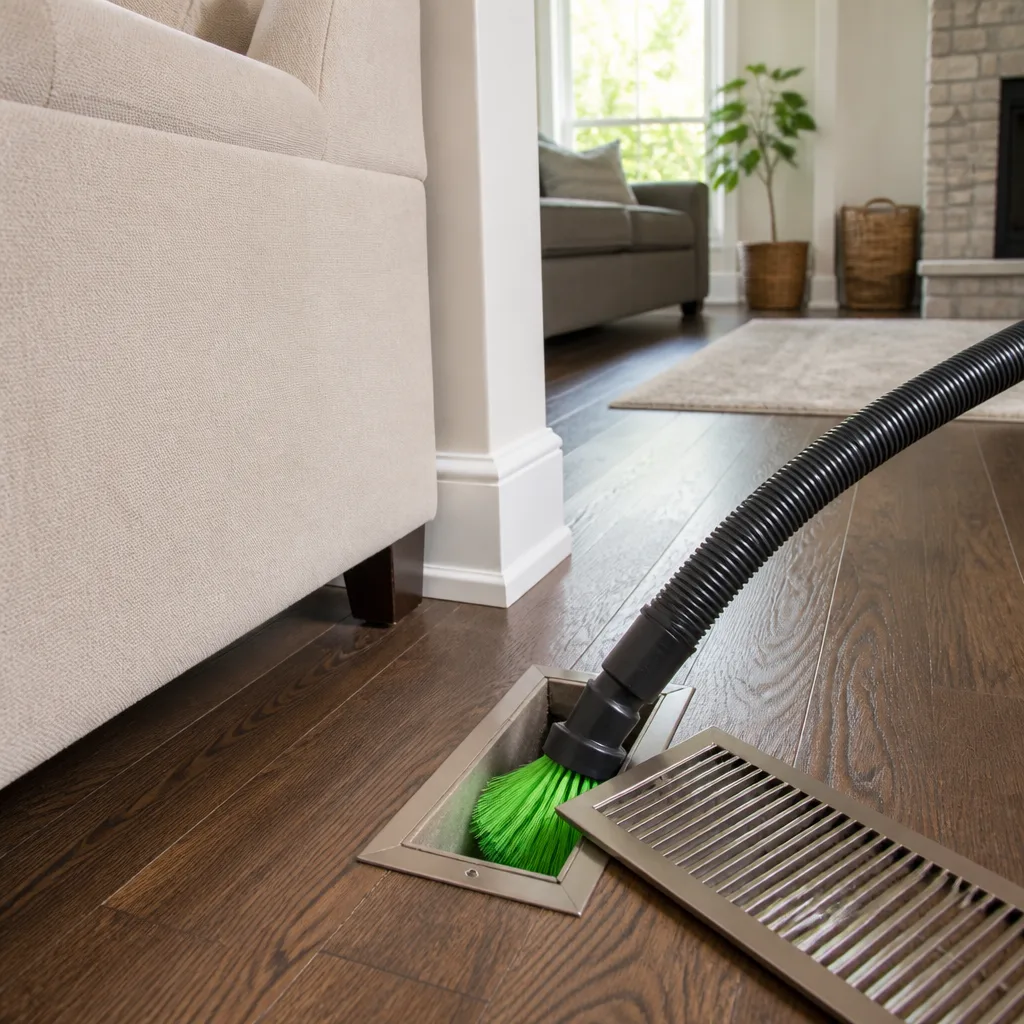 Sanitizing & deodorizing
Whole-system duct and dryer vent check with before-and-after photos - you see exactly what came out of your vents
That "$99 whole-house special" is a bait ad - the real number appears once they are in your hallway, or the "clean" is a shop-vac at the register. We photograph the inside of your ducts before and after instead.
The Complete Guide to Air Duct Cleaning in Bellevue
Here’s what surprises most homeowners: in Bellevue, the dirtiest ducts we inspect are often in the newer, tightest houses. The instinct is that an old 1970s ranch with worn flex duct must be the problem property, and a 2015 build with sealed windows must be pristine. It’s usually the reverse. Airtight construction traps moisture and stale air, and rushed installs leave gaps that pull contaminants straight in. This guide explains how Pacific Northwest humidity, construction era, and HVAC design combine to shape what’s really inside your ducts, what a complete cleaning actually involves, and how to tell the difference between that and a shop-vac pass.
Quick Answer
A full air duct cleaning in Bellevue typically covers every supply and return run, the air handler, the evaporator coil, and the drain pan, and most homes need it every three to five years. The right interval depends less on a calendar number than on your system’s age, filter history, and construction era, because Bellevue’s wet climate drives contamination faster in some duct types than others. Source-removal cleaning with professional-grade equipment from Rotobrush or Nikro is the standard worth asking for, and any quote that skips the air handler isn’t a full-system job.
Styles & brands we work with
- Whole-home duct cleaning
- Dryer vent cleaning
- Camera inspection
- Sanitizing & deodorizing
Table of Contents
- Why Bellevue Has Two Opposite Duct Problems
- How Pacific Northwest Humidity Feeds Contamination
- Source Removal vs. What Budget Cleaners Actually Do
- System Age and Filter History Beat “Years Since Last Cleaning”
- What a Complete Cleaning Includes
- Red Flags in Bellevue’s Construction Boom Properties
- Duct Repair and Sealing: Clean Ducts Are Only Half the Job
- Common Mistakes to Avoid
Why Bellevue Has Two Opposite Duct Problems
Bellevue’s housing stock splits into two broad eras, and they fail in opposite ways. Walk through older neighborhoods and you’re in the 1970s ranch and split-level territory. Then a short drive takes you into the post-2010 builds, where sealed envelopes and tight construction set the rules. Applying one cleaning process to both is a mistake.
In the older housing, the dominant duct material is flex duct, and a lot of it has been sitting in damp crawlspaces or attic cavities for decades. Flex duct’s interior liner is a spiral of thin plastic over a metal helix. Once moisture gets in, that liner gives microbial growth somewhere to settle, and the ribbed channels trap dust where a straight run wouldn’t. Old furnace filters that were never changed at the right interval make it worse, layering debris that becomes food for whatever is growing.
Newer Bellevue builds usually run rigid metal duct, often with sealed joints and a centrally located air handler. The ductwork itself stays cleaner when it’s properly installed. The problem shifts to the tight envelope. Less natural air exchange means moisture has fewer places to escape, so a duct system that carries cool air through an insulated conditioned space has to be checked for condensation and blocked returns. A home can be a decade old and still have a filter that’s been ignored, or a return that’s undersized for the square footage.
What that means for scheduling is simple. In an older ranch, the priority question is: where has moisture been collecting, and is the flex duct intact? In a newer build, it’s: is the system balanced, are filters being changed, and are the sealed joints still sealed? Different era, different diagnosis, different scope of work.
How Pacific Northwest Humidity Feeds Contamination
Cost, weather, and contamination are linked here in a way that doesn’t apply in drier markets. Bellevue gets most of its moisture over a long, cool wet season, and the shoulder months keep dew points high enough that air handler closets and crawlspaces stay damp. That persistent humidity is why microbial growth doesn’t wait for a visible water leak.
- Condensation on cold surfaces. When a cool metal coil or duct run crosses a humid space, the water doesn’t always announce itself. It sheens the surface and coats the nearest dust layer.
- Wet-season attic and crawlspace air. If supply or return runs pass through a vented attic or crawl, humid air moves in around any gap and lets the duct insulation soak.
- Filter neglect during shoulder seasons. A filter left in place too long becomes a moist mat that holds debris instead of catching it.
- Stagnant returns in tight homes. Sealed envelopes reduce air exchange, so any moisture that gets in lingers longer.
This is why a straightforward “how many years since the last cleaning?” question isn’t the right one for a Bellevue home. A damp crawlspace and a slow leak from an old dryer vent can put more moisture into a duct system in a year or two than five dry years would. The practical check is to look for the signs: musty odor when the system kicks on, dust settling faster than usual, condensation on the air handler, or a filter that looks damp when you change it. If you see any of these, the system needs a real inspection, not a delay. Our technicians have up to 12 years of experience with wet-season duct problems across the Eastside, and we build the diagnosis around what the home is actually doing.
Source Removal vs. What Budget Cleaners Actually Do
The industry standard for a real cleaning is called source removal: physically dislodging and vacuuming out the accumulated debris, then pulling it out of the system under negative pressure. What happens with many budget crews is closer to dislodgement without removal. They run a shop vac or a small blower brush through a few registers and leave the loosened material in the system, where it settles a few weeks later or ends up in your coil.
Here’s how to tell the two apart before anyone gets on a ladder:
- Ask what equipment is being used. A professional-grade system like Rotobrush or Nikro has a high-efficiency vacuum, a whip or brush assembly that actually scrubs the duct wall, and a HEPA filtration stage. A shopper bag on a bare shop vac is not that.
- Ask whether the air handler and coil are on the scope. If the quote stops at the registers, a lot of the debris stays right where it can recontaminate the ducts the moment airflow restarts.
- Ask for before-and-after photos of the inside of the ducts. We take them on every full-system job. If a service can’t show you the inside of your own ducts, the price tells you almost nothing.
- Ask how the system is put back. Proper cleaning includes verifying that joints, registers, and access points are back in place before the system runs.
- Ask about the price structure. A trustworthy quote is one flat price for the whole system, agreed before work starts. A teaser number that “depends on how many vents” invites the jump from the ad to the invoice after the technician is on site.
The difference shows up in the air handler and coil more than anywhere else. A coupon-based job that skips them is really a register-and-trunk cleanup, and the dust that’s doing the most work in your home usually started inside the coil and drain pan. If you want a clearer picture of the full scope, our page on air duct cleaning lays out the process step by step.
System Age and Filter History Beat “Years Since Last Cleaning”
The most common scheduling mistake we see is treating duct cleaning like a fixed-interval errand. “It’s been five years, so it must be time” is a reasonable starting point, but it’s a weak diagnostic. System age and filter history carry more of the story.
A system that’s been in service for 25 years has carried 25 years of fine particulate through its ducts at every cycle. It usually needs a heavier cleaning than the interval would suggest, and its coil and blower should be inspected for the kind of buildup that limits airflow. A system that was installed recently, has been run with a clean filter and a proper return, and sits in a home with no moisture issues can sometimes go longer between cleanings.
Filter history is the single best and worst signal in the house. A homeowner who has been changing a good filter at the right interval has already done most of the defnding work. One who has been letting a filter sit for a year or more has been quietly feeding the system.
- Heavier buildup: a system over 20 years old, a filter history with skipped changes, a pet-heavy household, or a recent remodel with drywall dust.
- Lighter buildup: a newer system, consistent filter changes, a good return path, no moisture issues, and no recent construction dust.
- Every homeowner’s question: if you don’t know the filter history, that’s the first thing to check when a technician inspects the system.
When we look at a Bellevue home, we’d rather ask about the HVAC service records and the filter habits than the last cleaning invoice. Those two pieces usually point directly at what the ducts need.
What a Complete Cleaning Includes
A duct-only quote is a partial job, and the gap between “ducts” and “full system” is where most of the air quality improvements actually live. Here’s what belongs inside a complete cleaning, in the order we work through it:
- Every supply run. Each branch is cleaned from the trunk out to the register, not just at the boot.
- Every return run. Returns carry the largest volume of air back to the handler, and they collect the most debris on that trip.
- The air handler. The blower wheel, cabinet, and interior surfaces, where debris that passes the filter settles and recirculates.
- The evaporator coil. The finned surface where cooling happens, and where a mat of debris can choke airflow and hold moisture.
- The drain pan. The most overlooked component in the system and a common source of musty odor.
- The plenum and trunk lines. The main distribution paths between the handler and the branches.
Once the whole system is cleaned, we seal access points and verify airflow through the registers before we call the job finished. A cleaning scope that stops at the registers isn’t the same job, and the pricing shouldn’t be compared as if it were. If the system includes a whole-home humidifier or UV component, our HVAC cleaning service covers those as part of the system scope.
Red Flags in Bellevue’s Construction Boom Properties
Fast construction leaves specific fingerprints. When a duct system went in during a building boom, the joints, sealing, and hanger spacing tell you more about likely leaks than any label. In our experience on Eastside properties, the issues cluster in a set of predictable spots.
- Gaps at plenum connections. Where the trunk meets the air handler, flexible connectors and taped joints that were rushed leave seams open. Warm or humid air gets pulled in whenever the system runs.
- Undersized returns. Tighter construction and open floor plans often leave the return path short of what the added square footage needs, which forces the system to work harder and gives debris more places to settle.
- Flex duct pinched or kinked around corners. When a run has to clear framing members in tighter spaces, it’s tempting to force it. A kinked run restricts airflow and collects dust in the sag.
- Sealed joints that opened up in a season or two. Tape that was applied over a dusty or damp surface loses grip. If the joint was sealed at all, it can fail.
- Register boots that don’t line up flush with the drywall. Even a small offset lets attic or wall-cavity air pull into the supply stream.
If you buy a home in one of the newer Bellevue subdivisions, the most useful first step is an inspection that looks at those five points, not just a cleaning quote. The system may be young, but the install details will decide how much of the ductwork is doing its job.
Duct Repair and Sealing: Clean Ducts Are Only Half the Job
A cleaning removes the contamination that’s there. Without repairing and sealing what let the contamination in, you’re setting a timer on the next cleaning. That’s why we treat duct repair and sealing as part of a house’s air system rather than an add-on.
Leaking joints are the usual culprit in the Bellevue climate. Every gap in a joint pulls air in, and if that air comes from a crawlspace or an attic, it carries dust and moisture with it. So the sequence matters: clean the system, find the leaks, seal them properly, then verify the airflow is where the system design intended. A sealing job that skips the cleaning seals contamination in. A cleaning job that skips the sealing cleans a system that’s already leaking.
This is also the point where our brand relationships do real work. We install Honeywell and Aprilaire filtration and air-quality components, so we’re not just looking at ductwork in isolation, we’re looking at how filters, humidifiers, and the rest of the system fit together. Products from Guardsman handle the protective side of the system, and Abatement Technologies equipment supports the sanitizing side of the job when a system needs more than a clean. That’s one call covering cleaning, repair, sealing, and air quality, instead of three contractors and a schedule that never lines up.
If your system includes a clothes dryer vent, that’s a separate but related concern, and our dryer vent cleaning covers it. A restricted dryer vent is a fire risk and a moisture source at the same time, and it’s worth a look any time the rest of the system is being serviced.
Common Mistakes to Avoid
- Buying the cheapest per-vent price. The number is designed to get the truck to your door, and the actual scope arrives once the technician is on site. Ask for one flat price per system, agreed before work starts.
- Accepting a duct-only quote. A cleaning that skips the air handler, coil, and drain pan leaves the concentrated debris in place, where it recirculates. Full-system scope or it’s not the same job.
- Scheduling by opinion instead of inspection. A Bellevue home in a damp crawlspace setting and a newer build with a clean filter history need different intervals. Get the inspection first, then decide.
- Skipping the before-and-after photos. The clearest way to know the work happened is to see the inside of your own ducts from both angles. Ask for the photos up front.
- Treating a musty odor as a cleaning problem alone. Persistent odor usually points to moisture feeding the system. Clearing the ducts without fixing what’s feeding them is a temporary fix.
- Ignoring the filter afterward. A good cleaning into a system with a neglected filter restarts the problem immediately. The filter is part of the maintenance, not an afterthought.
- Forgetting the dryer vent. It’s a separate line but a real one, and a restricted vent is worth checking while the technician is already there.
See the difference
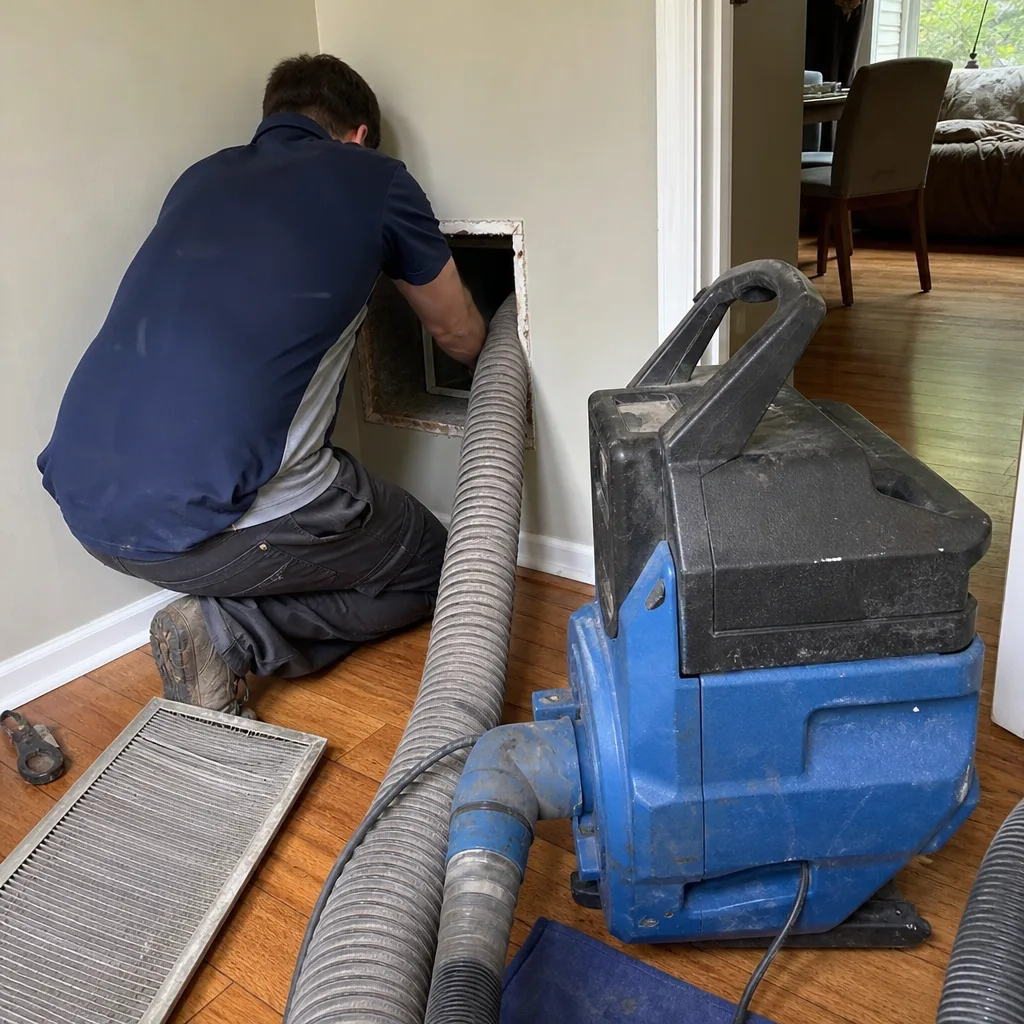 Before
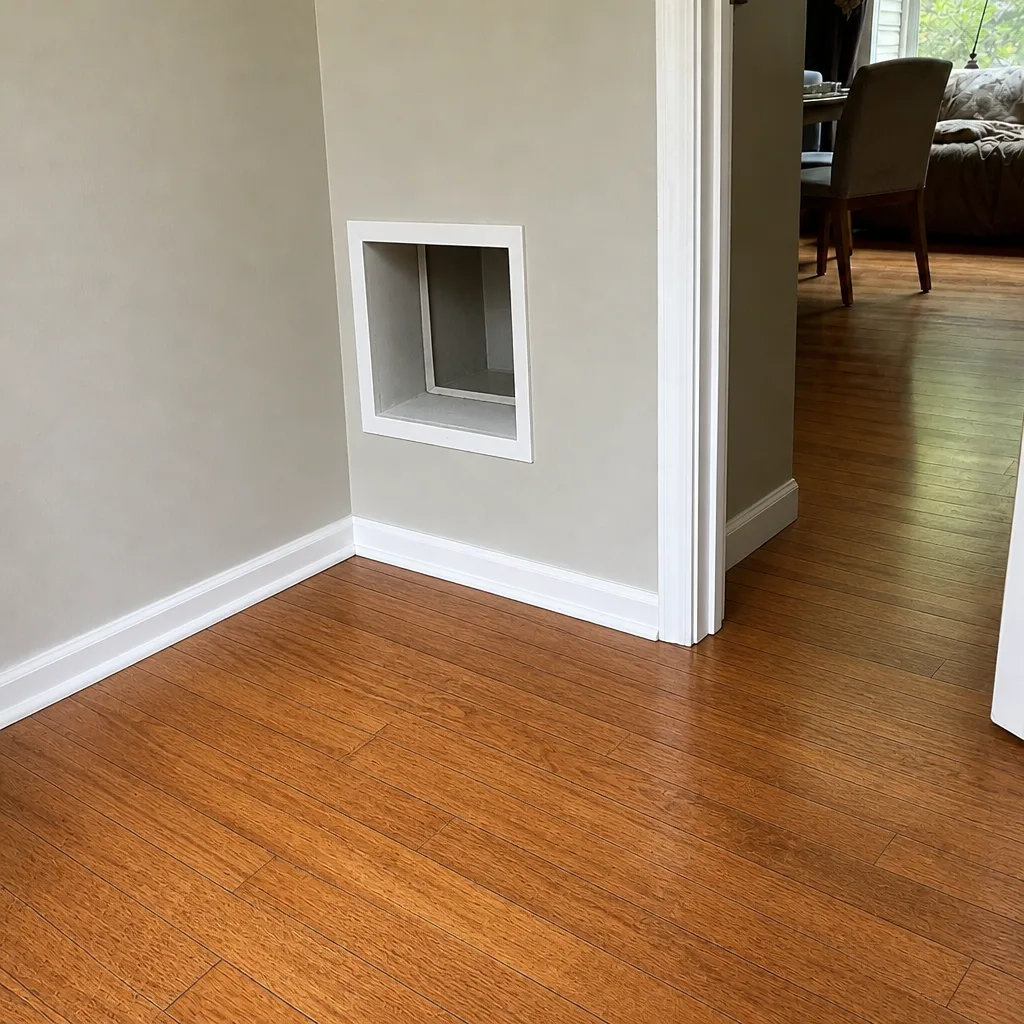 After
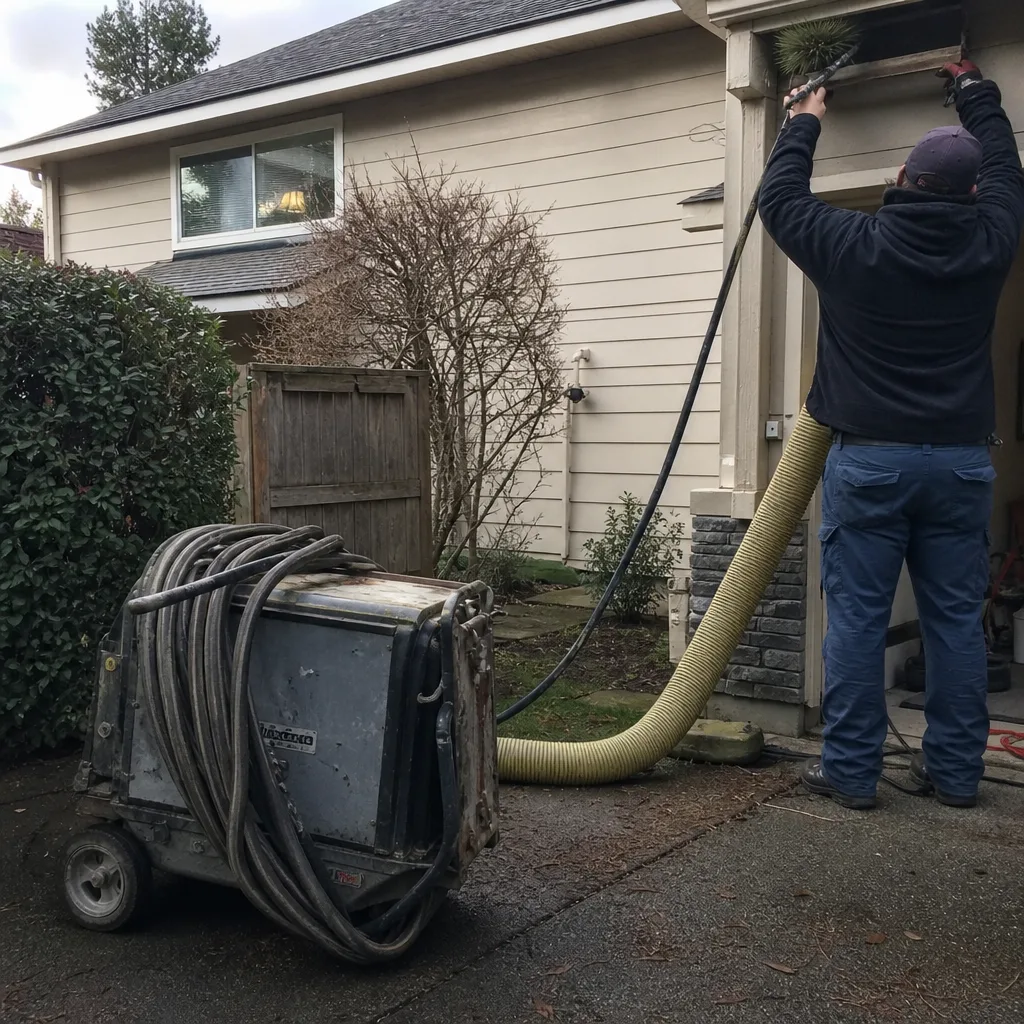 Before
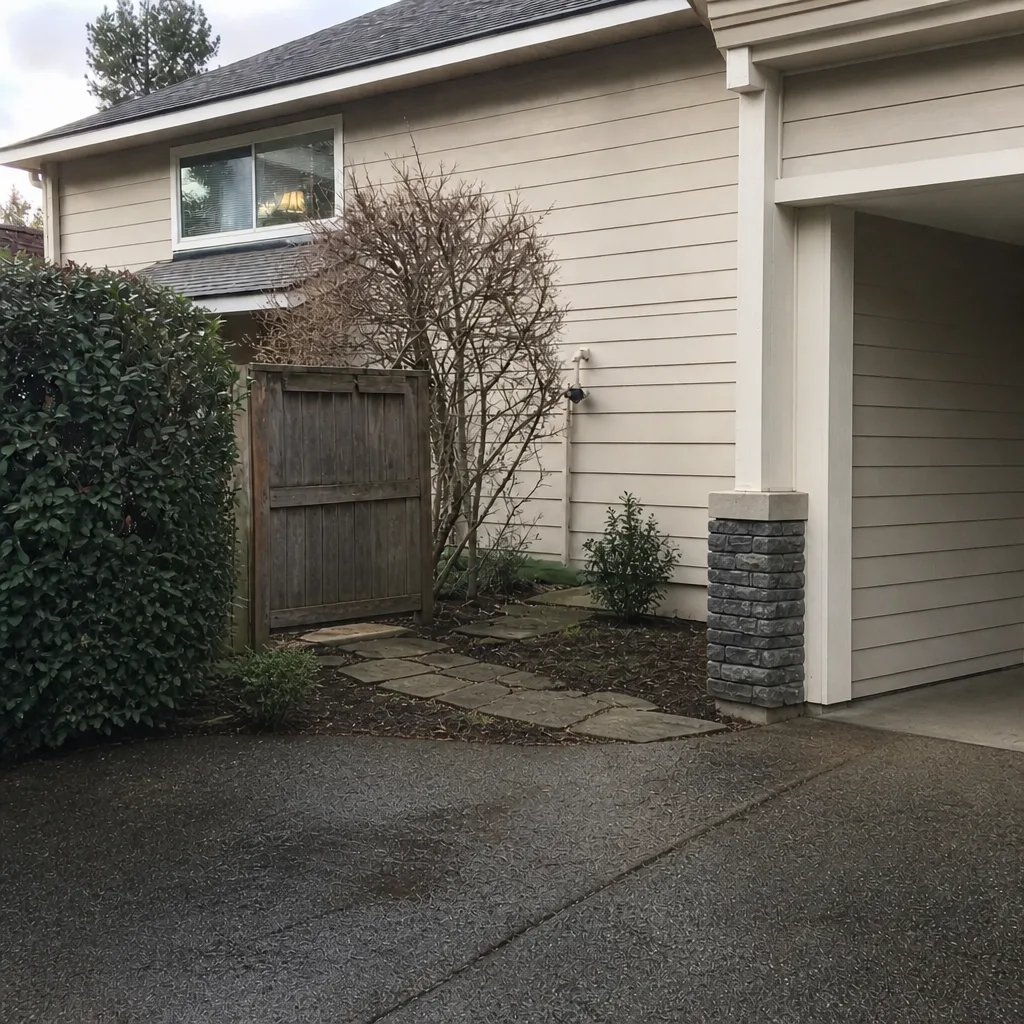 After
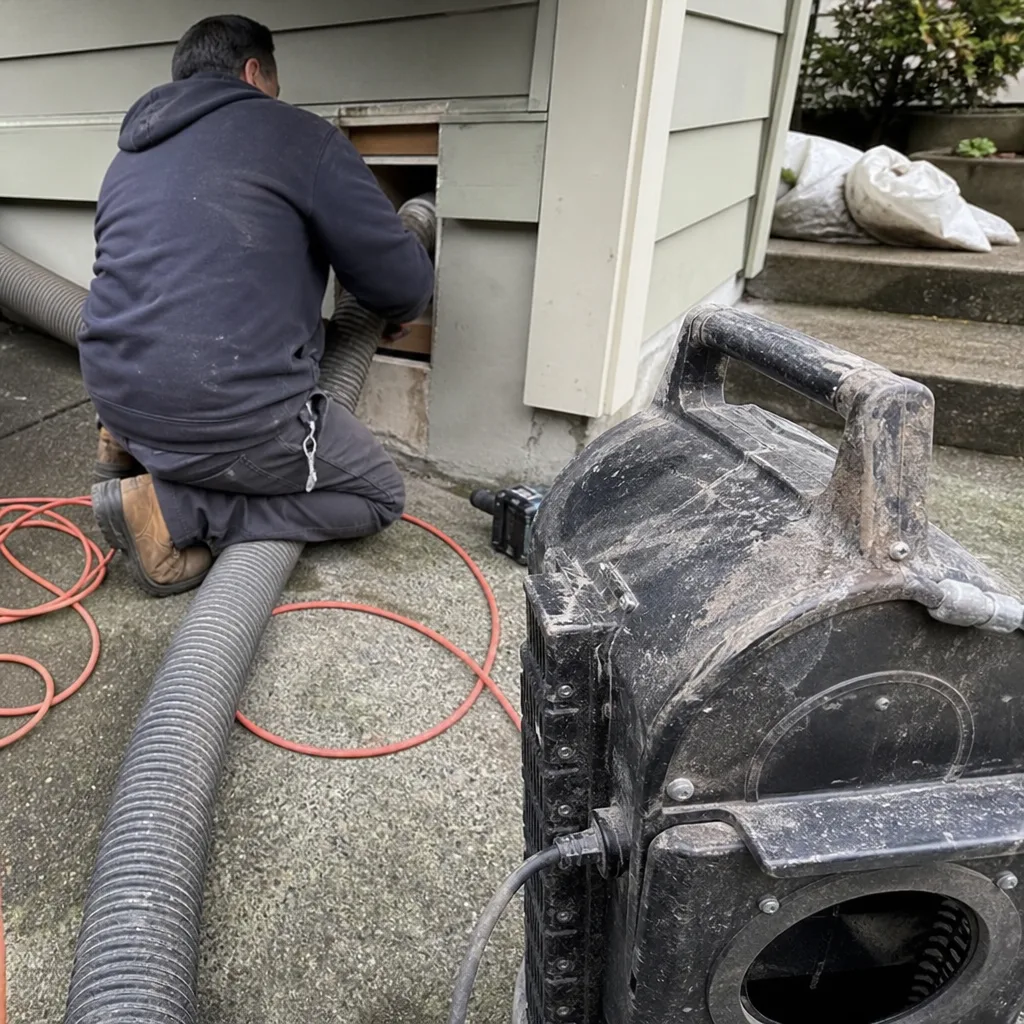 Before
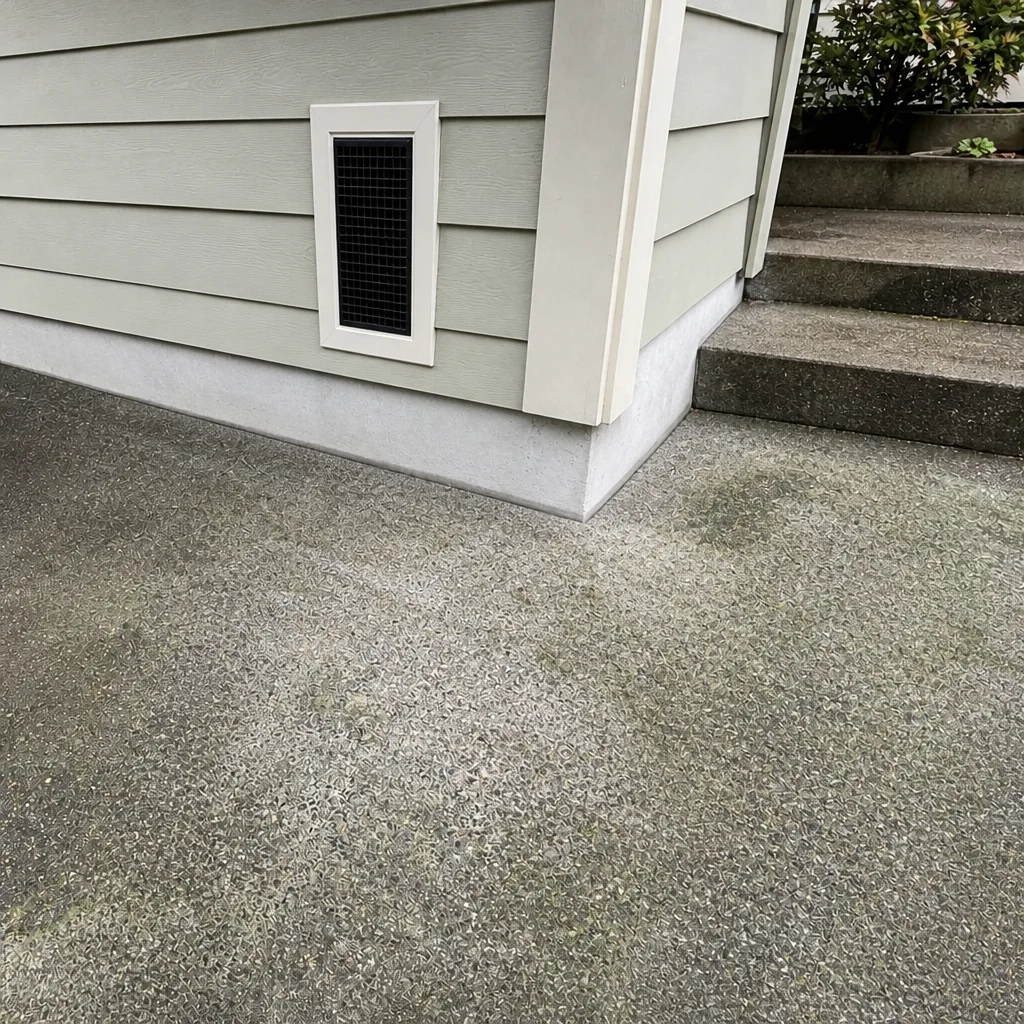 After
When to Call a Professional
Some signs you can handle yourself, and some need a trained eye. A single dusty register or a filter that’s due is not an emergency. What calls for a professional look is anything that points to moisture or airflow trouble: a musty smell when the system kicks on, visible condensation on the air handler, dust settling faster than you can clean it, or noticeable airflow problems at certain registers. Those point to issues that a register-and-trunk wipe won’t fix. A recent remodel with drywall dust, a system you’ve never had inspected, and any home where the filter history is unknown are all reasons to get the system looked at properly. Our technicians have up to 12 years of experience diagnosing these conditions across the Eastside.
The inspection matters as much as the cleaning. A professional can tell you which parts of the system need cleaning, which need sealing, and which are already working as they should. That’s the difference between a routine job that fixes the real issue and a cleaning that buys you time until the next one. Bellevue Air Duct Cleaning Co offers free estimates in Bellevue. Call (888) 845-6042. We answer 24/7. Fast dispatch from 7am to 7pm, Sunday through Friday.
Frequently Asked Questions
Most full-system cleanings in Bellevue fall in a broad range, and the written estimate is what sets the final price. The scope is what moves the number: duct-only work, a full-system job with the air handler and coil, and anything above it that involves repair or sealing are different jobs at different prices. The cost we recommend you ask about is one flat price per system, agreed before work starts, rather than a per-vent number that expands on site. Estimate ranges we quote are always written and itemized. Call (888) 845-6042 for an exact quote, estimates are free.
Because they’re usually quoting a smaller job, or one that doesn’t include the equipment. A cheap quote often scopes out the air handler, coil, and drain pan and uses a shop vac rather than a professional-grade system. It may also build the price on a per-vent setup that grows once the technician is on site. The fair comparison isn’t the price on the ad, it’s the scope in the written estimate. Ask what’s included before you compare numbers. Call (888) 845-6042 for a free estimate.
Ask for before-and-after photos of the inside of your own ducts. We take them on every full-system job. You should also be able to see the access points were resealed, the registers went back in place, and the filter was replaced or handed back to you. If a service can’t show you the inside of the ducts, you have no way to check the work. Call (888) 845-6042 to schedule an inspection.
Three to five years is a reasonable starting point, but Bellevue’s wet climate and wide range of construction eras make the calendar a weak guide. A home with a damp crawlspace, an older flex-duct system, or a recent remodel and a skipped filter history may need it sooner. A newer system with a clean filter history can often go longer. The right answer comes from an inspection, not the last invoice. Call (888) 845-6042 for a free estimate.
It can reduce the dust and debris that recirculate through the home, which is worth addressing, but no cleaning removes every allergen from the air. We recommend the full-system scope, including the coil and drain pan, because the concentration of debris there is what the system pulls into the supply. If you see moisture, we also assess for sealing and sanitizing where it’s needed. Call (888) 845-6042 to talk through what your system needs.
Cleaning a damaged system doesn’t fix the underlying issue, so we look at repair and sealing as part of the inspection. Leaking joints pull outside air in, and in Bellevue’s damp spaces that air arrives with dust and moisture. The order is clean, find the leaks, seal them, then check airflow. That’s why we offer duct repair and sealing alongside cleaning. Call (888) 845-6042 for a free estimate.
Yes, all three areas fall under our five core services, alongside duct repair and sealing and air quality and sanitizing. A restricted dryer vent is worth a look any time the rest of the system is serviced, and the air handler and coil are part of what a full-system HVAC cleaning covers. Bellevue homeowners usually get more value from one provider covering the whole air system than from scheduling several. Call (888) 845-6042 for a free estimate.
The Bottom Line
The biggest mistake in air duct cleaning is treating it as a fixed-interval errand rather than a diagnosis. In Bellevue, your home’s construction era, duct material, filter history, and moisture conditions decide what the system actually needs. A 1970s ranch with damp flex duct and a post-2010 tight build with rushed joints aren’t the same job, and the cleaning scope should reflect that. Look for a full-system scope that includes the air handler, coil, and drain pan, professional-grade equipment like Rotobrush or Nikro, one flat price per system agreed before work starts, and before-and-after photos of your own ducts. That’s the standard worth holding any quote to. At Bellevue Air Duct Cleaning Co, we use professional-grade equipment for a reason: getting to the source of contamination is what makes the cleaning last.
If you’re not sure where your system stands, start with an inspection and ask the questions in this guide. A good estimate will answer them plainly, and the scope should be written down before anyone touches the ducts.
For a free estimate in Bellevue, call (888) 845-6042. We answer 24/7. Fast dispatch from 7am to 7pm, Sunday through Friday. One flat price per system, agreed before work starts, before-and-after photos of your own ducts, and one call covering cleaning, repair, sealing, and air quality.
Written by the team at Bellevue Air Duct Cleaning Co.