
Last updated November 23, 2026
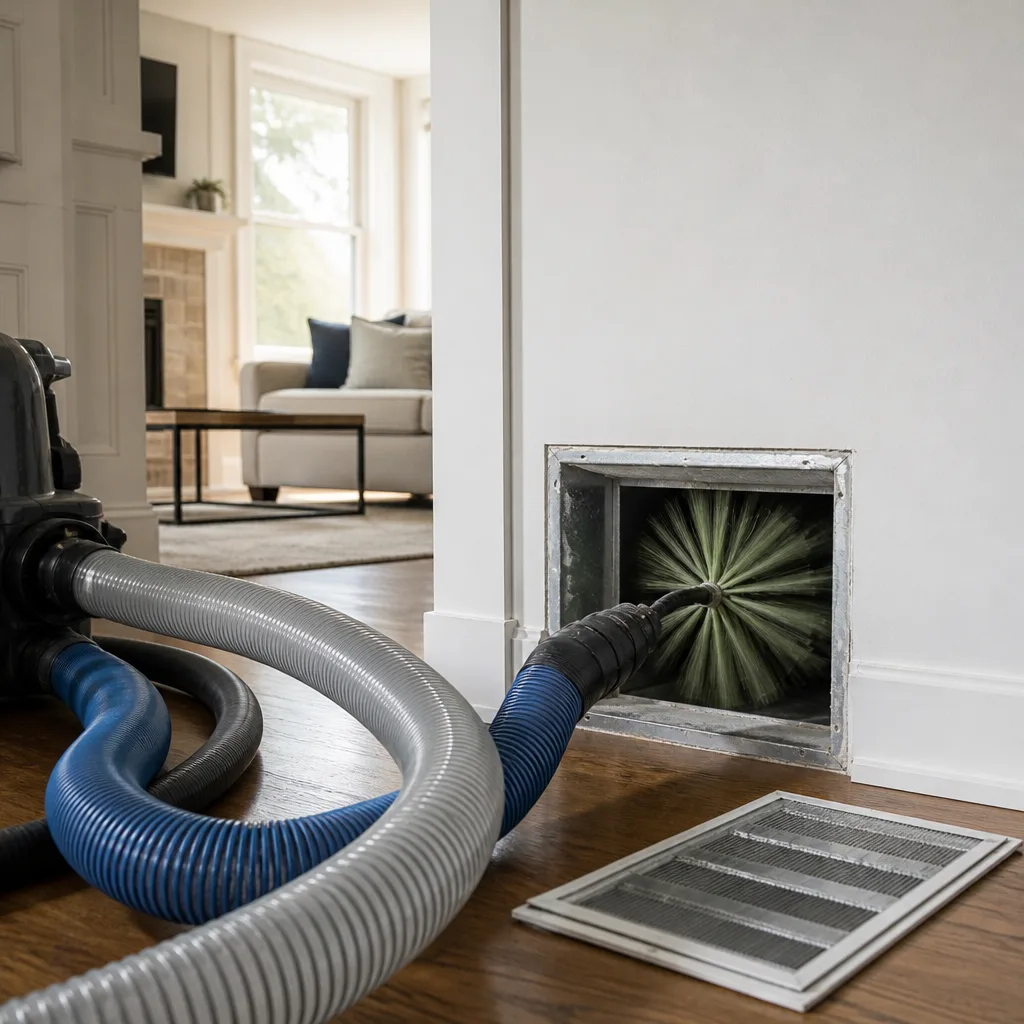 Whole-home duct cleaning
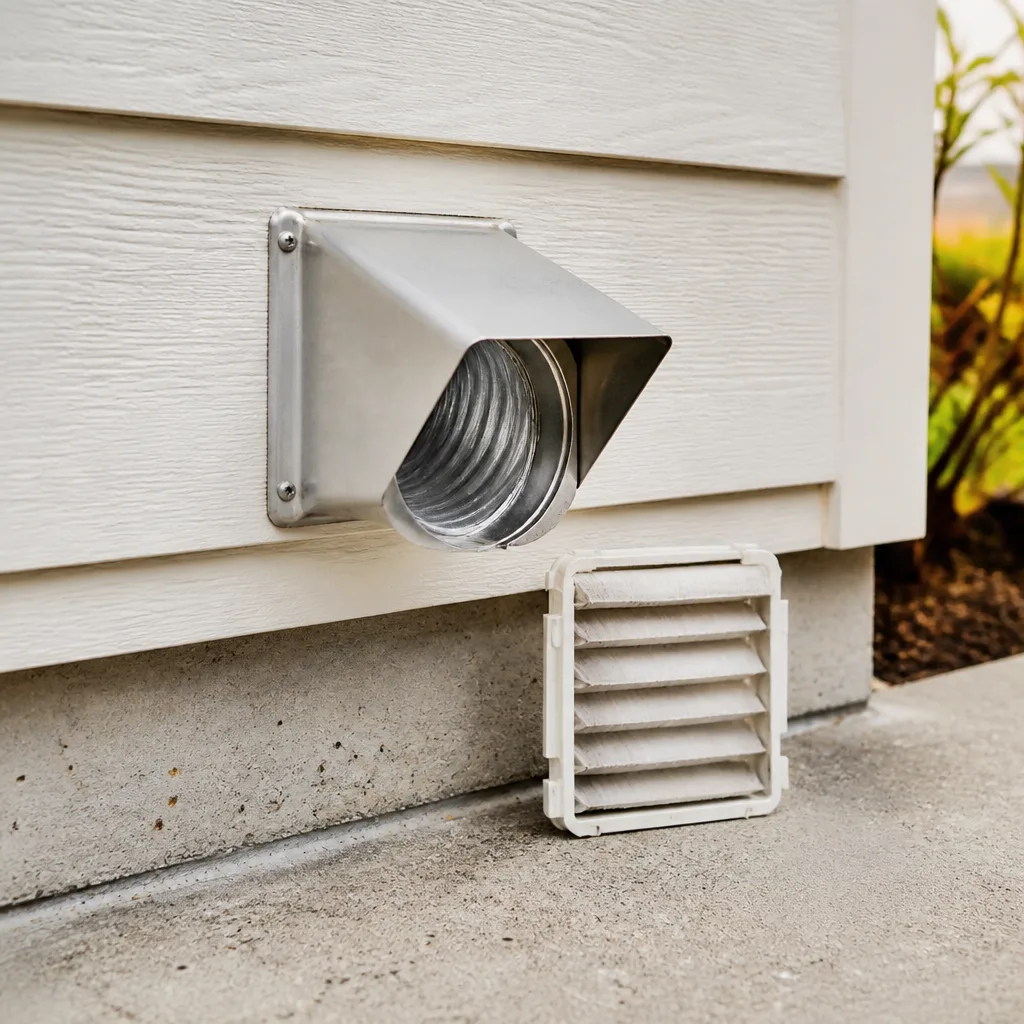 Dryer vent cleaning
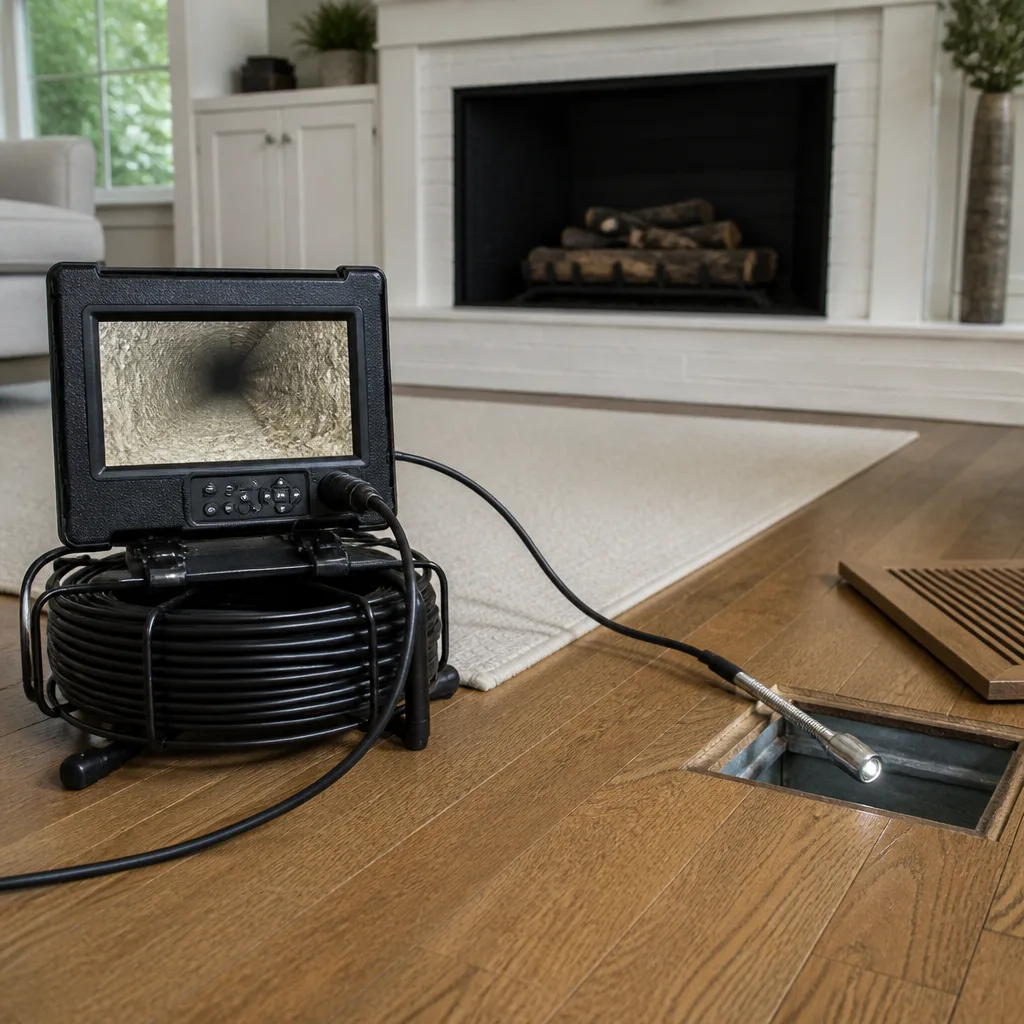 Camera inspection
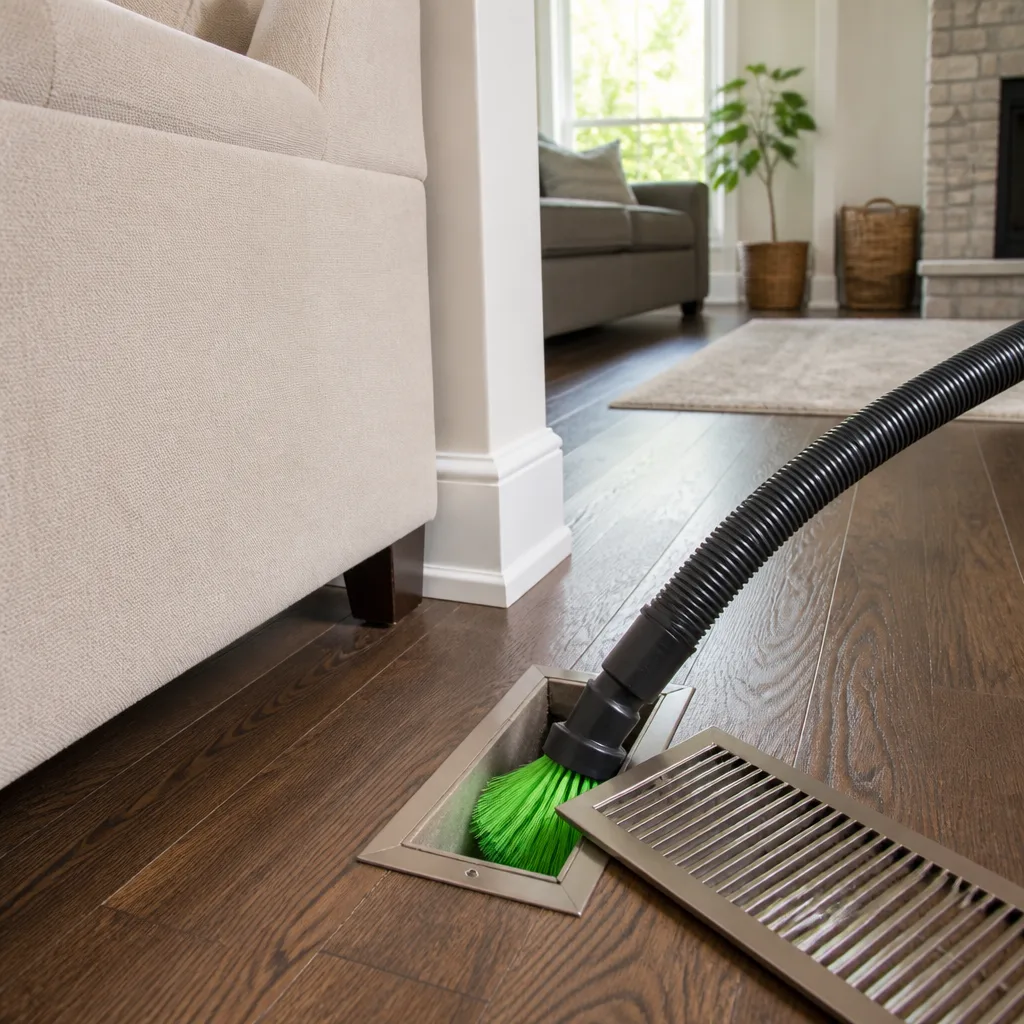 Sanitizing & deodorizing
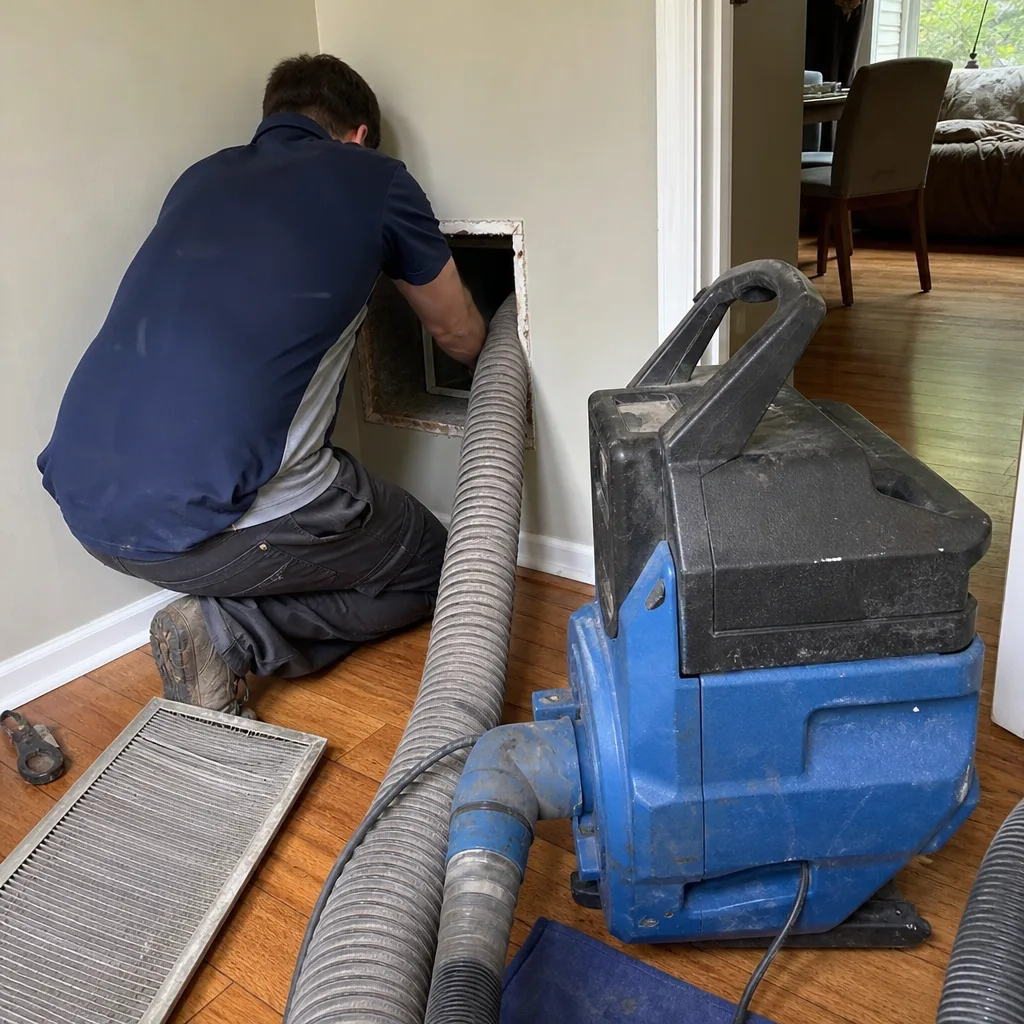
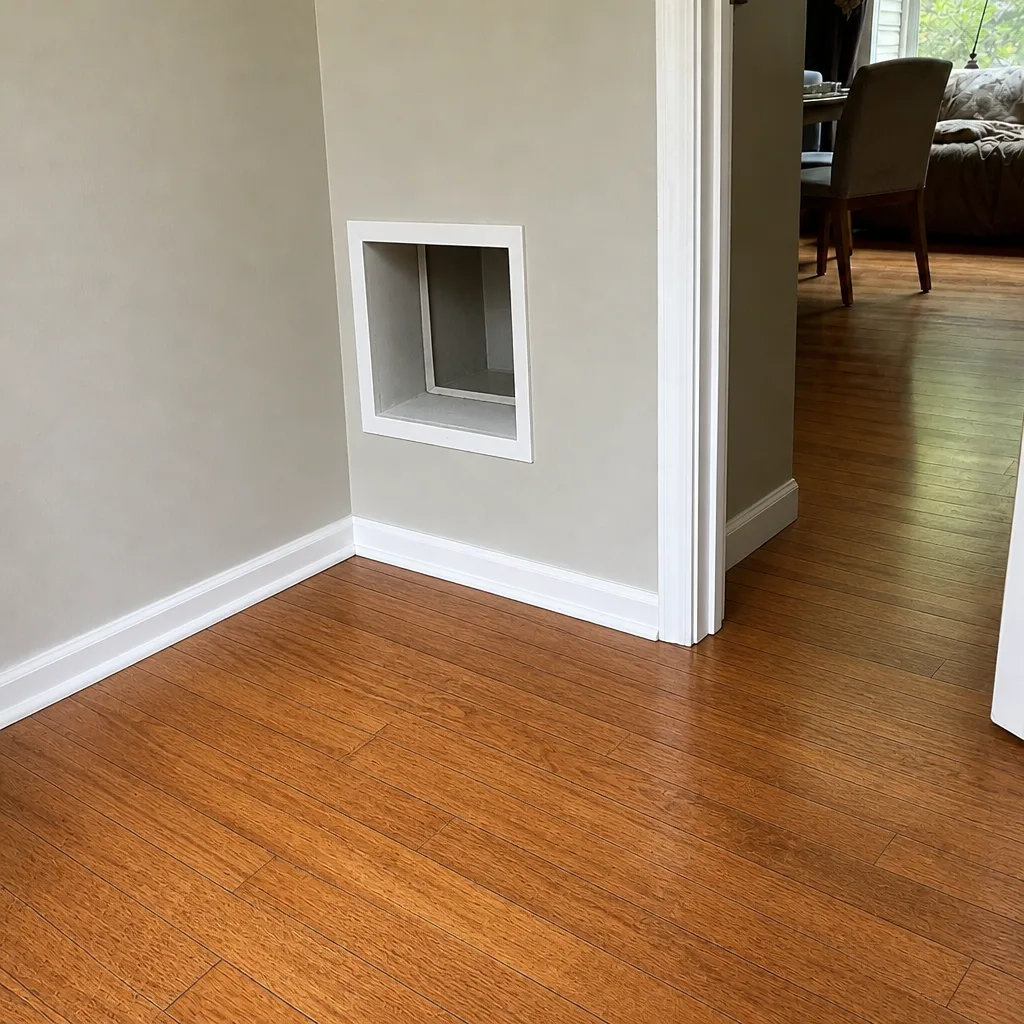
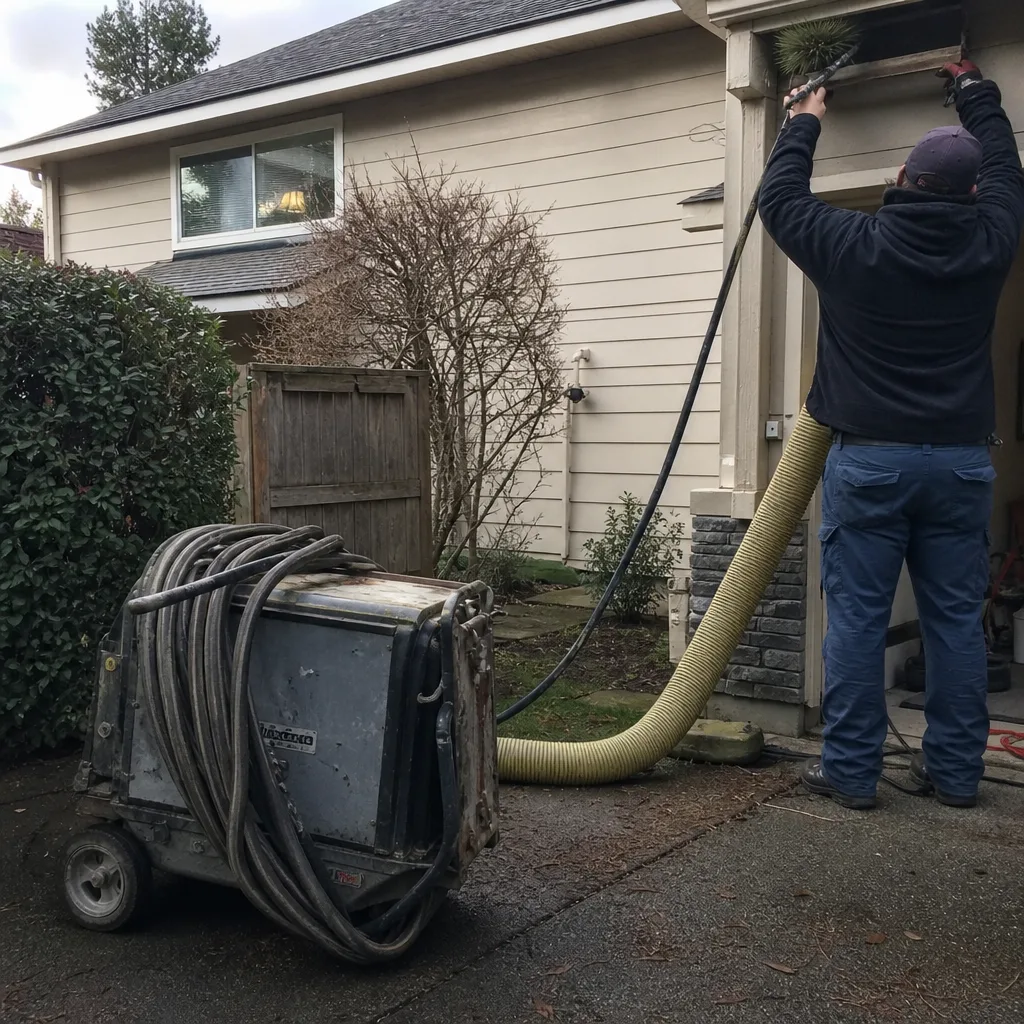
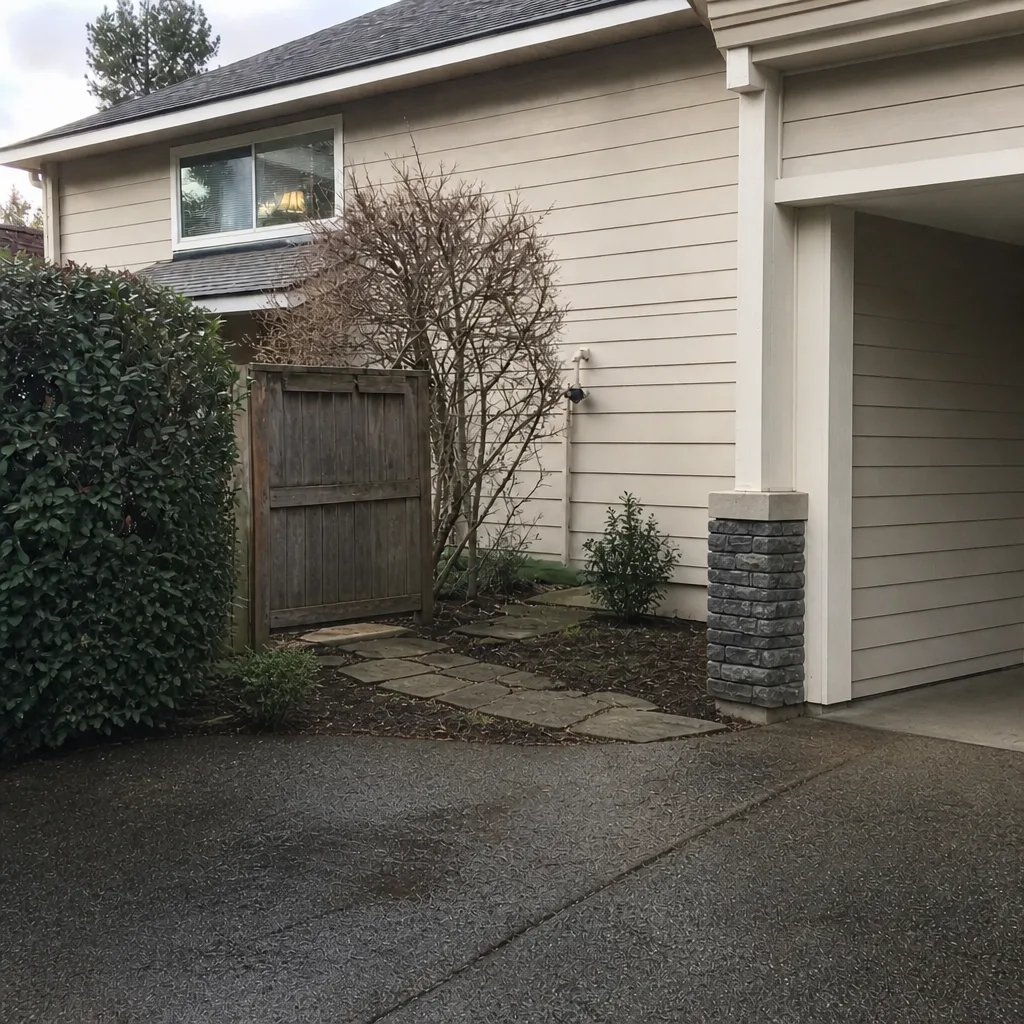
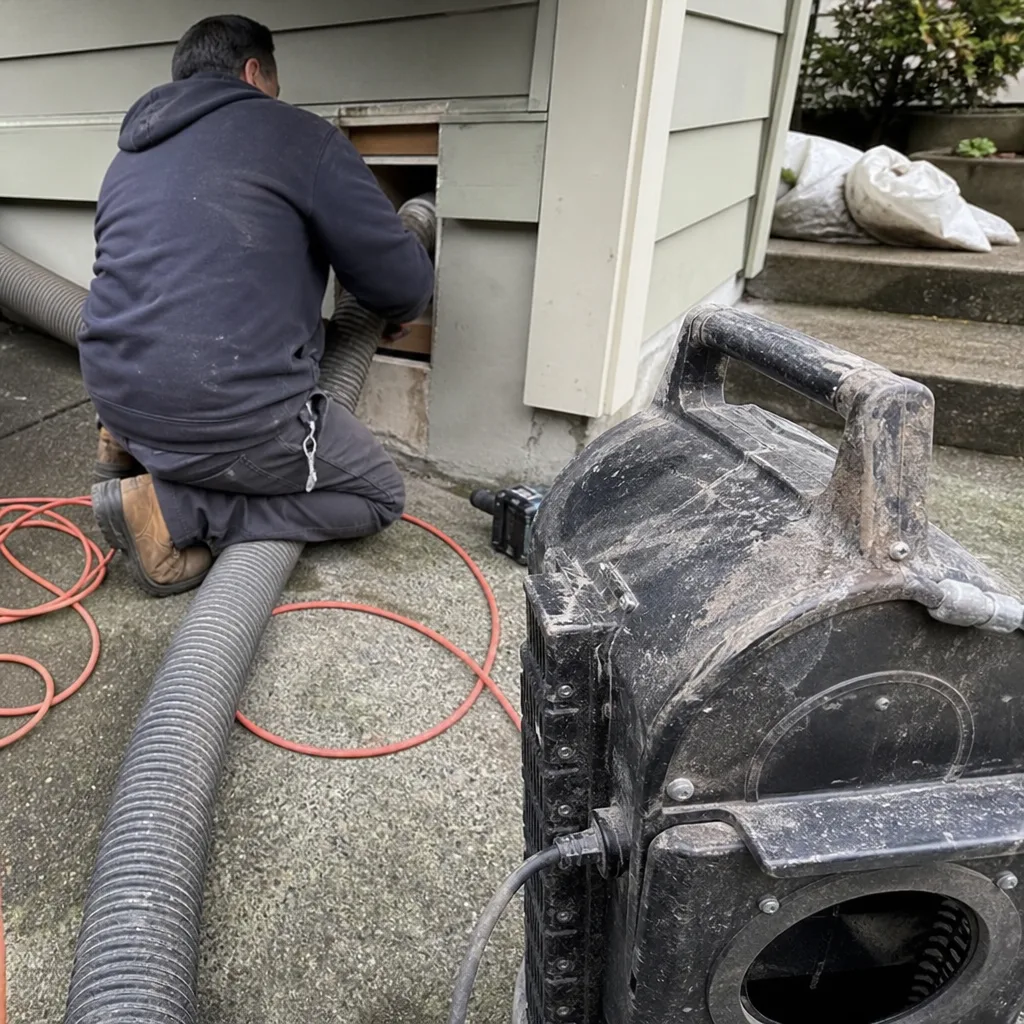
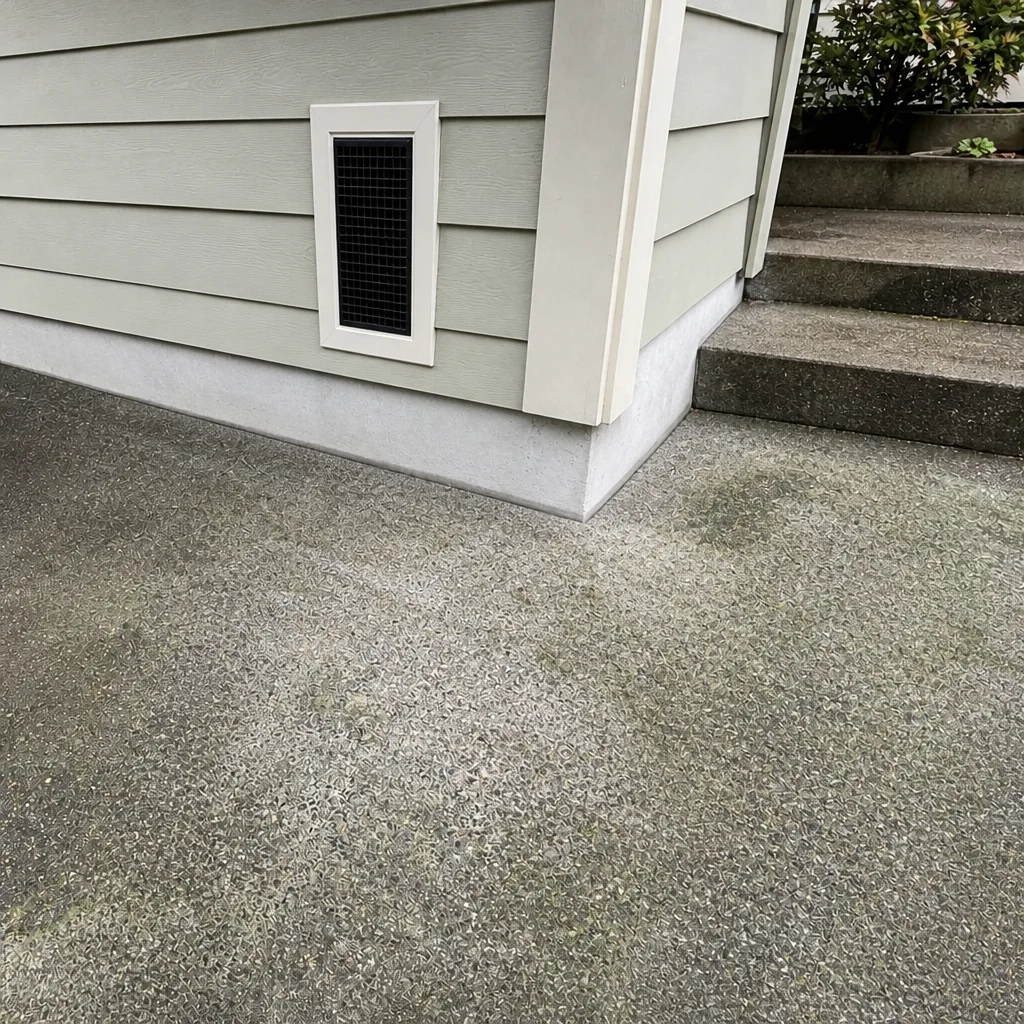
Whole-system duct and dryer vent check with before-and-after photos - you see exactly what came out of your vents
That "$99 whole-house special" is a bait ad - the real number appears once they are in your hallway, or the "clean" is a shop-vac at the register. We photograph the inside of your ducts before and after instead.
Air Duct Cleaning Maintenance Checklist for Bellevue Homeowners
Changing your filter on time doesn’t tell you whether your ducts are clean. It only tells you the filter did its job. That’s the misconception we run into most often in Bellevue: a homeowner swaps a filter every three months, feels diligent, and assumes the ductwork behind it must be fine. Filters catch what reaches them. They say nothing about what’s already settled in the runs, what’s growing where condensation collects, or where a seam has quietly opened and started pulling attic air into your supply. This guide is about the rhythm that catches those problems early: a month-by-month, season-by-season checklist of what to look at, what to measure, and what to leave alone.
Quick Answer
A working air duct maintenance checklist for a Bellevue home has three layers: a monthly filter and airflow check you can do in five minutes, a quarterly look at vents, registers, and visible duct runs, and an annual professional inspection and cleaning that uses negative-pressure equipment no homeowner can replicate. Between visits, watch for uneven filter loading, musty smells when the furnace kicks on, and dust patterns near supply registers, because each one points to a different underlying problem.
Styles & brands we work with
- Whole-home duct cleaning
- Dryer vent cleaning
- Camera inspection
- Sanitizing & deodorizing
Table of Contents
- Why a Checklist Beats a Cleaning Schedule
- Monthly Checks: Filters and Airflow
- Quarterly Checks: Registers, Vents, and Visible Ducts
- The Annual Professional Inspection
- Reading Filter Loading as a Diagnostic Signal
- Bellevue-Specific Triggers: Smoke Season, Wet Winters, Renovations
- What to Document Before You Call a Professional
- Homeowner Tasks vs. Tasks That Need Negative-Pressure Equipment
- Common Mistakes to Avoid
- When to Call a Professional
- Frequently Asked Questions
Why a Checklist Beats a Cleaning Schedule
A cleaning schedule tells you when to book a service. A checklist tells you when something is going wrong, and it does it months before a cleaning would have caught it. That distinction matters more in Bellevue than in a lot of places, because the local conditions that stress a duct system don’t arrive on a clean annual cycle. Wildfire smoke rolls in on its own timeline. Wet winters create condensation problems in crawl spaces and unheated runs. Renovation dust shows up whenever a homeowner decides to remodel a kitchen. A calendar can’t anticipate any of that. A set of recurring observations can.
We’ve seen the same pattern in homes across Bellevue neighborhoods like Bridle Trails, Crossroads, and Somerset: a duct system that gets looked at regularly catches small problems early, and a system that only gets looked at when something smells wrong typically has a bigger issue behind it by the time anyone calls. The checklist below is designed to be that early warning system.
Three layers of attention, running in parallel:
- Monthly: filter condition and airflow feel, five minutes, no tools.
- Quarterly: registers, vent grilles, visible duct runs, and any odd smells.
- Annually: a full professional inspection and cleaning, which we’ll explain in detail so you know what it should cover.
None of this is exotic. The value is in doing it on a rhythm rather than reacting to a smell. If you want the broader service backdrop, our overview of Bellevue Air Duct Cleaning Co lays out the full scope we work within.
Monthly Checks: Filters and Airflow
The monthly check takes about five minutes and requires no tools. It’s built around two observations: what your filter looks like, and how the air feels coming out of your supply registers.
Filter check. Pull the filter and hold it up to a light. A filter that’s evenly gray across its face is doing its job. A filter that’s dark in one corner and nearly white in another is telling you something else entirely, and we’ll get to that in the filter-loading section below. Note the loading pattern before you toss it. It’s the single most useful diagnostic signal a homeowner can collect between professional visits.
Airflow feel. Hold your hand in front of a few supply registers, close enough to feel the push. You’re not measuring cubic feet per minute; you’re noticing change. If a register that used to feel strong now feels weak, something has shifted: a damper, a disconnected run, a collapsing flex duct, or a filter that’s loaded past the point of passing air. One weak register is a data point. Several weak registers on the same side of the house is a pattern worth writing down.
Filter replacement timing. The standard advice of every three months works for a lot of Bellevue homes, but it’s a starting point, not a rule. Homes near busy corridors, homes with pets, and homes running the system hard through a smoky August will load filters faster. The filter tells you when it needs changing. Use the three-month mark as the outer edge, not a target.
Our technicians have up to 12 years of experience, and the consistent finding is that the homes that replace filters on observation rather than on a rigid calendar end up with cleaner systems overall. The filter is the cheapest diagnostic instrument in your house. Treat it that way.
- Turn the system off before removing the filter.
- Hold the filter up to a light source and note the loading pattern.
- Write down the loading pattern (even, one-sided, cornered, or edge-heavy).
- Feel the airflow at three or four supply registers and note any that feel noticeably weak.
- Replace the filter with the correct size, matching airflow direction arrow.
Quarterly Checks: Registers, Vents, and Visible Ducts
Four times a year, expand the monthly check into a walkthrough of the whole house. This is an eyes-only inspection: you’re looking, not opening anything up, and definitely not reaching into ductwork.
Registers and grilles. Look at the face of each supply register and return grille. A light dust film is normal. A visible mat of dust, a dark ring around the edges, or dust streaks trailing up the wall or ceiling near the register tells you air is escaping around the boot and pulling dust with it. That’s a sealing issue, not a cleaning issue, and it’s one most duct cleaners won’t address. Duct repair and sealing is a distinct service for a reason.
Visible duct runs. If your system runs through an unfinished basement, garage, or attic, take a look. You’re checking for disconnected joints, sagging flex duct, crushed runs, or sections that look damp. Any of those is a call-a-professional signal, not a fix-it-yourself job.
Smells. Turn the system on after it’s been off for a while. A musty smell on startup points to moisture somewhere in the system. A dusty, burnt smell is usually a filter or blower issue. A smell you can’t identify is worth logging with the date and the conditions when it appeared.
Dryer vent. This one doesn’t run through your HVAC system, but a quarterly check belongs on the same walkthrough. Look behind the dryer. Lint accumulation at the wall connection, a vent flap that doesn’t open fully when the dryer runs, or clothes taking longer than usual to dry all point to a restriction. Our dryer vent cleaning service exists because that restriction is a fire risk, not a nuisance. Check it quarterly, and book professional cleaning based on your household’s laundry volume.
The Annual Professional Inspection
Once a year, a professional inspection and cleaning should happen. The key word is “professional,” and the reason is equipment. Homeowner checks are eyes-only. Professional work uses negative-pressure equipment that puts the entire duct system under vacuum and keeps debris from spreading into living space while it’s being dislodged.
What a legitimate annual service should include:
- Source-removal cleaning of the full system, not just the easy-to-reach runs.
- Rotobrush or Nikro equipment, which is what we use and what you should expect to see a professional company operate.
- Inspection of the blower, coils, and accessible connections, with findings explained rather than just reported.
- Before-and-after photos of your own ducts so you can see what changed.
- An honest assessment of whether repair or sealing is needed, not an automatic upsell.
An annual visit is also your best opportunity to get the system inspected by someone who knows what leakage looks like. If a joint is loose, a run is disconnected, or a boot isn’t sealed to the drywall, a cleaning alone won’t fix it. That’s why we treat repair and sealing as a first-class service alongside cleaning. Our HVAC cleaning work covers the equipment side, and the duct cleaning work covers the distribution side.
While the system is open, an annual visit is the right time to consider air sanitizing if you’ve had a mold concern or a persistent allergy complaint. We use Abatement Technologies equipment for that work, which is built for serious contaminant control rather than a light mist.
Reading Filter Loading as a Diagnostic Signal
Filter loading is often treated as a simple replacement reminder. In practice, the pattern of loading tells you which problem you’re actually looking at. This is one of the things a homeowner can diagnose without any tools, and it’s one of the things most people throw away by not looking before they replace.
Four patterns worth knowing:
- Even loading across the full face. The filter is working as designed. If loading happens quickly, the incoming air is unusually dusty or the system is oversized, not that the ducts are failing.
- One-sided loading (dark on one half, light on the other). Air is being drawn unevenly through the return. This usually points to a return duct that’s restricted, a balancing issue, or a duct run that’s partially disconnected and pulling air from a different path.
- Corner or edge loading. Air is bypassing the filter frame. The filter isn’t sealing to its slot, or the slot was cut too large. Bypass means unfiltered air is reaching your equipment, which is exactly the condition that accelerates coil fouling.
- Loading on one edge only, with the opposite edge nearly clean. The filter housing is tilted or the return plenum is misaligned, and air is preferentially entering one side. This is a duct-and-housing geometry issue, and it’s a job for a professional to look at.
Write down which pattern you see on each filter change. A pattern that stays consistent for a year is a stable system. A pattern that changes, or that never seems even no matter what filter you use, is the strongest possible hint that the duct system itself has a leak or a bypass. That’s not a filter problem. Bring the observation to the annual visit and you’ll skip a diagnostic round.
Honeywell and Aprilaire filter systems are common in Bellevue homes, and their filter frames are built to seal properly – but only if the correct media is installed correctly. If you’ve inherited a home with one of these systems, confirm the media type and size before you buy replacements.
Bellevue-Specific Triggers: Smoke Season, Wet Winters, Renovations
Some duct problems are universal. Some are regional. Bellevue sits in a specific set of conditions that put a duct system through three distinct stressors over the course of a year, and a checklist built for a generic climate will miss them.
Late-summer wildfire smoke. Western Washington’s smoke season typically runs from late July into September, and when it arrives, a home’s HVAC system becomes the main source of filtered air. During a smoke event, run the system with a high-quality filter, keep windows closed, and expect the filter to load dramatically faster than normal. Replace it as soon as the smoke clears. Don’t wait for the three-month mark; a filter that’s been through a smoke event is done. A musty or smoky smell lingering into October usually means the smoke wasn’t just filtered, it also settled in the ductwork and on the coil.
Wet winters and crawl spaces. Bellevue’s wet season is long, and many homes in the area sit on vented crawl spaces. Cold, damp air under the house plus a duct run that passes through that space is a condensation setup. That moisture feeds mold in the ductwork, and it’s the most common root cause behind the musty smell we get called about in February and March. If your home has a crawl space, look at the duct runs passing through it every fall before the wet season starts.
Post-renovation debris. Any time a home in Bellevue gets a kitchen remodel, a bathroom redo, or a flooring replacement, drywall dust and construction debris find their way into return ducts. The filter catches some of it, but the heavier particles settle in the runs downstream of the filter. A duct cleaning after major renovation is not optional; without it, that debris continues to cycle through the house for years. If you want to understand the mechanics, our air duct cleaning page covers the process end to end.
What to Document Before You Call a Professional
The single biggest diagnostic-upsell trap a homeowner can walk into is calling a professional with no information. A technician who arrives with nothing to work from has to diagnose everything from scratch, and that’s fertile ground for a longer, pricier recommendation than the situation warrants. A homeowner who arrives with a documented baseline gets a targeted answer instead.
Before you call, gather:
- Photos. One photo of the current filter (held up to light) and one of each of the registers you’ve been checking. Timestamped.
- HVAC model and serial number. On the furnace or air handler. A photo of the data plate works.
- Filter size and type. The printed dimensions and the MERV rating if it’s printed.
- Last professional service date. Approximate is fine. If you don’t know, say so.
- Your filter loading pattern observations. Even a sentence (“dark on the right side for the last three changes”) tells a professional a lot.
- Any smells, their timing, and what conditions trigger them.
- Any recent renovation, weather event, or moisture issue.
With those in hand, a real diagnostic conversation is possible. Without them, the conversation defaults to “we’ll have a look.” That’s not a scam in itself, but it opens the door to more speculative recommendations. Give a professional the information and the recommendations tend to get narrower and more specific.
Homeowner Tasks vs. Tasks That Need Negative-Pressure Equipment
One of the most useful things a checklist can do is draw a clear line around what you should not attempt. Duct cleaning has a real DIY ceiling, and it’s much lower than the internet suggests.
Tasks a homeowner can do:
- Filter inspection and replacement.
- Register and grille dusting.
- Airflow testing by hand at supply registers.
- Visible inspection of accessible duct runs and joints.
- Lint check at the dryer vent connection.
- Photo documentation and recordkeeping.
- Clearing furniture and belongings away from returns so airflow isn’t blocked.
Tasks that need professional equipment:
- Removing settled debris from inside duct runs.
- Cleaning the blower wheel, evaporator coil, and plenum interiors.
- Repair and sealing of disconnected or leaking joints.
- Sanitizing the system after a mold or moisture event.
- Any work inside the ductwork beyond the register opening.
The reason isn’t gatekeeping. It’s that professional duct cleaning relies on negative-pressure equipment: the entire system is put under vacuum, and mechanical agitation (Rotobrush or Nikro tools) is used to dislodge debris while the vacuum keeps it contained. A shop vac at the register does the opposite. It loosens surface dust without containing it, and that dust ends up back in the air, on your furniture, and in your lungs. The equipment is what makes the difference.
Once the system is clean, maintaining the result is where homeowner tasks matter most. Filters, airflow checks, and register dusting are what stretch a professional cleaning into years of benefit. The two layers work together, and neither substitutes for the other.
Common Mistakes to Avoid
- Replacing the filter without looking at the loading pattern first. You’re throwing away your best diagnostic information. Note the pattern every time, even if it’s just a mental snapshot.
- Treating a musty smell as something to mask rather than trace. Air fresheners and scented filters cover a smell that’s telling you where moisture is collecting. In Bellevue’s wet winters, that’s usually the crawl space duct run.
- Skipping the post-renovation cleaning. Drywall dust and construction debris cycle through the house for years after a remodel if the ducts aren’t cleaned. Schedule a cleaning within a month of finishing a major project.
- Believing a cleaning alone fixes a leakage problem. If a joint is loose or a boot isn’t sealed, dust returns within months. Clean ducts are only half the job; sealing is the other half.
- Waiting for a smell before booking a service. By the time there’s a smell, the contamination is well established. The annual inspection is meant to catch problems before smell becomes the signal.
- Not running the system during wildfire smoke season. A closed-up home with the system off lets smoke settle into the house. With a good filter in place, running the system is the right move during a smoke event.
- Calling a professional with no information in hand. Photos, the HVAC model, filter size, and your filter-loading notes shorten the diagnostic conversation and keep recommendations narrow.
When to Call a Professional
Call a professional when any of the following shows up on your checklist: a filter loading pattern that’s clearly one-sided or corner-heavy; a musty or smoky smell that persists after a filter change; a register that’s lost noticeable airflow; visible dust streaks around a register boot; a renovation that’s finished in the last 90 days; or an annual cycle that’s been skipped. Also call if you can’t find evidence that the system has been professionally cleaned at all, or if you’ve never had it inspected.
If you’re not sure whether a finding rises to a service call, describe it. Bellevue Air Duct Cleaning Co offers free estimates in Bellevue; call (888) 845-6042 and tell us what you’ve observed. We answer 24/7, with fast dispatch from 7am to 7pm, Sunday through Friday.
Frequently Asked Questions
For most Bellevue homes, an annual inspection is the right cadence, with a full cleaning every two to three years unless a specific trigger comes up first. The triggers that shorten the cycle are post-renovation cleaning, a wildfire smoke season that filled the system, a musty smell that persists after a filter change, or a dry crawl space that’s shown moisture problems. Homes with allergy-sensitive occupants or pets tend to benefit from the shorter end of that range.
Every month, check the filter’s loading pattern and feel the airflow at a few supply registers. Five minutes, no tools. The filter pattern tells you whether air is being drawn evenly, and the airflow tells you whether something has changed upstream. Write both down; the sequence of observations over months is more useful than any single reading. Call (888) 845-6042 if you’d like help interpreting what you’re seeing.
A few reliable signs: one-sided or corner-heavy filter loading, dust streaks around register boots, a weak register on a run that used to be strong, or visible condensation near a duct joint in a cold space. Any of these suggests a leak or a bypass. A professional inspection with a vacuum in place is what confirms it, and sealing is what fixes it. Bellevue Air Duct Cleaning Co handles repair and sealing as a separate service, so we can clean and correct in the same visit.
Yes, if you did a kitchen, bathroom, flooring, or drywall project. Renovation dust settles in the duct runs downstream of the filter, and the filter alone does not catch it. A post-renovation cleaning is the most reliable way to stop that debris from cycling through the house. If you’re not sure the debris reached the ducts, a professional inspection with photographs of the interior will tell you quickly.
Homeowner maintenance is eyes-and-hands work: filter inspection, register dusting, airflow checks, visible inspection. Professional cleaning uses negative-pressure equipment and mechanical agitation to remove settled debris from inside the runs while keeping it contained. The two layers serve different purposes, and the professional layer can only be done with the right equipment. If you’d like a walkthrough of what a professional cleaning looks like, call (888) 845-6042 – estimates are free.
Yes. During late-summer smoke events, the filter loads much faster than normal and should be replaced as soon as the smoke clears. The ducts themselves can also hold smoke residue if the system ran with a loaded filter, and a smoky or musty smell that lingers into fall is the sign to book a cleaning. Bellevue Air Duct Cleaning Co’s air sanitizing service, using Abatement Technologies equipment, is available if you want to address odor at the system level rather than just in the air.
The Bottom Line
Air duct maintenance in Bellevue is a rhythm of observation, not a cleaning appointment. Change filters on observation, not on a rigid calendar. Look at the loading pattern before you replace. Feel the airflow at your registers every month. Walk the house every quarter. Document what you find, and bring it to an annual professional inspection. The homeowner tasks catch problems early. The professional layer removes debris, fixes leaks, and addresses moisture contamination that eyes-only checks can’t touch. Together they keep your HVAC system functioning as the filter, the distribution network, and the air handler that your home relies on. When you’re ready to schedule, the team is here to help.
Call (888) 845-6042 for a free estimate. We answer 24/7, with fast dispatch from 7am to 7pm, Sunday through Friday. You can also read more about our dryer vent cleaning and HVAC cleaning services if your checklist has turned up a concern there.
Written by the team at Bellevue Air Duct Cleaning Co.
See the difference
 Before
 After
 Before
 After
 Before
 After