
Last updated November 23, 2026
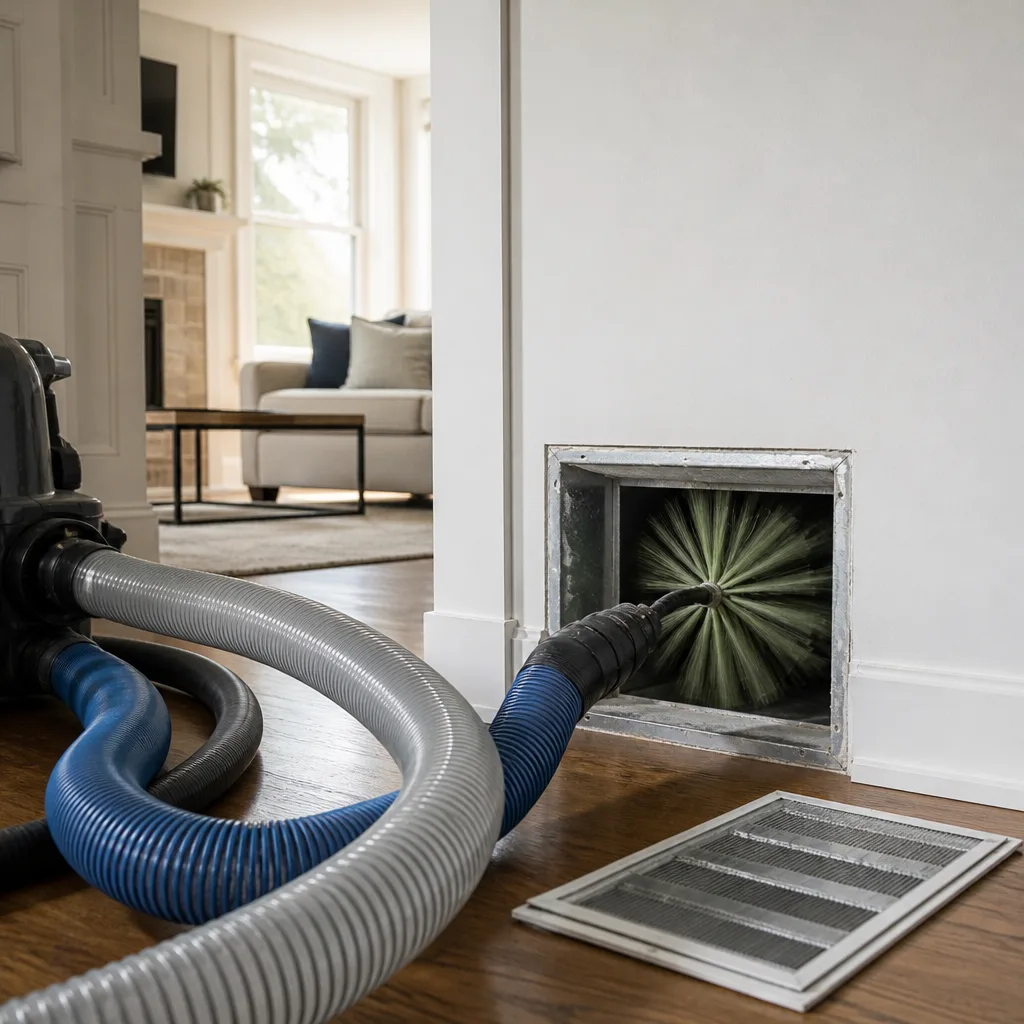 Whole-home duct cleaning
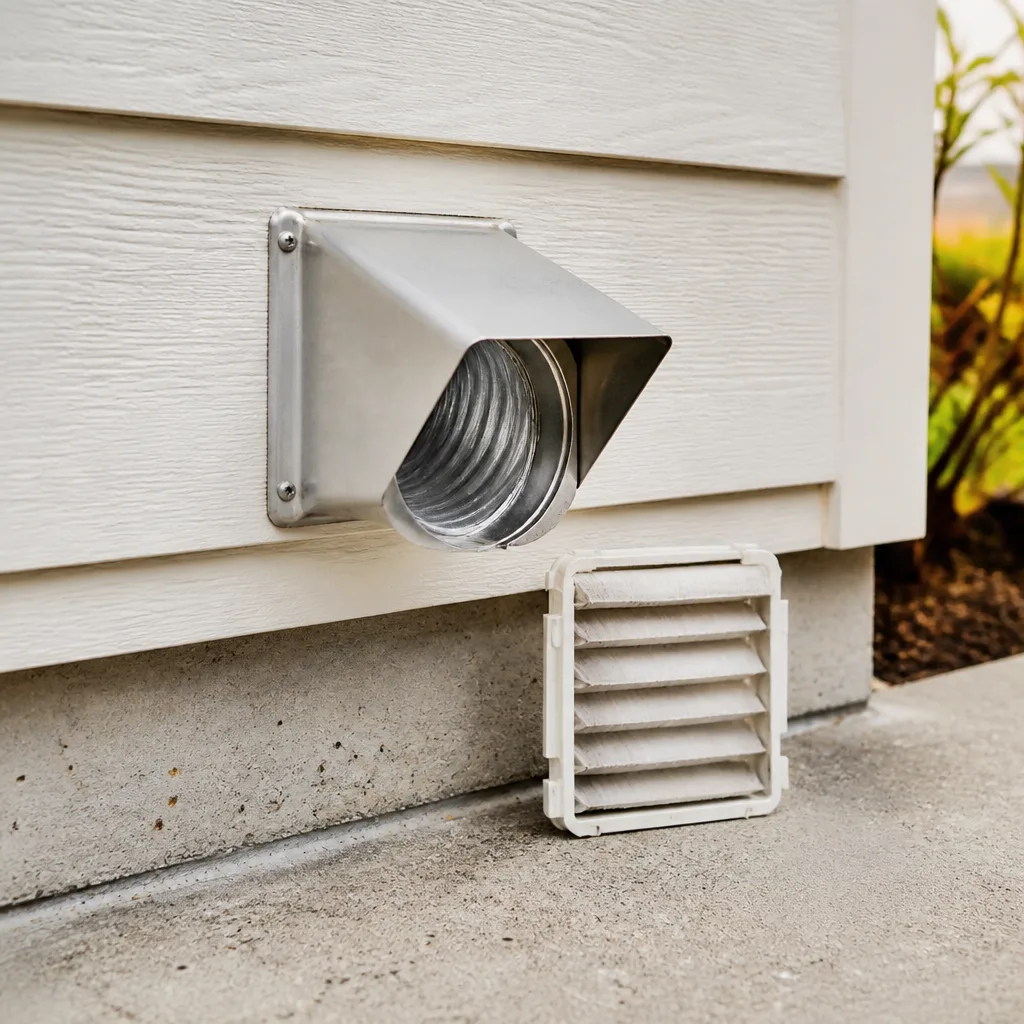 Dryer vent cleaning
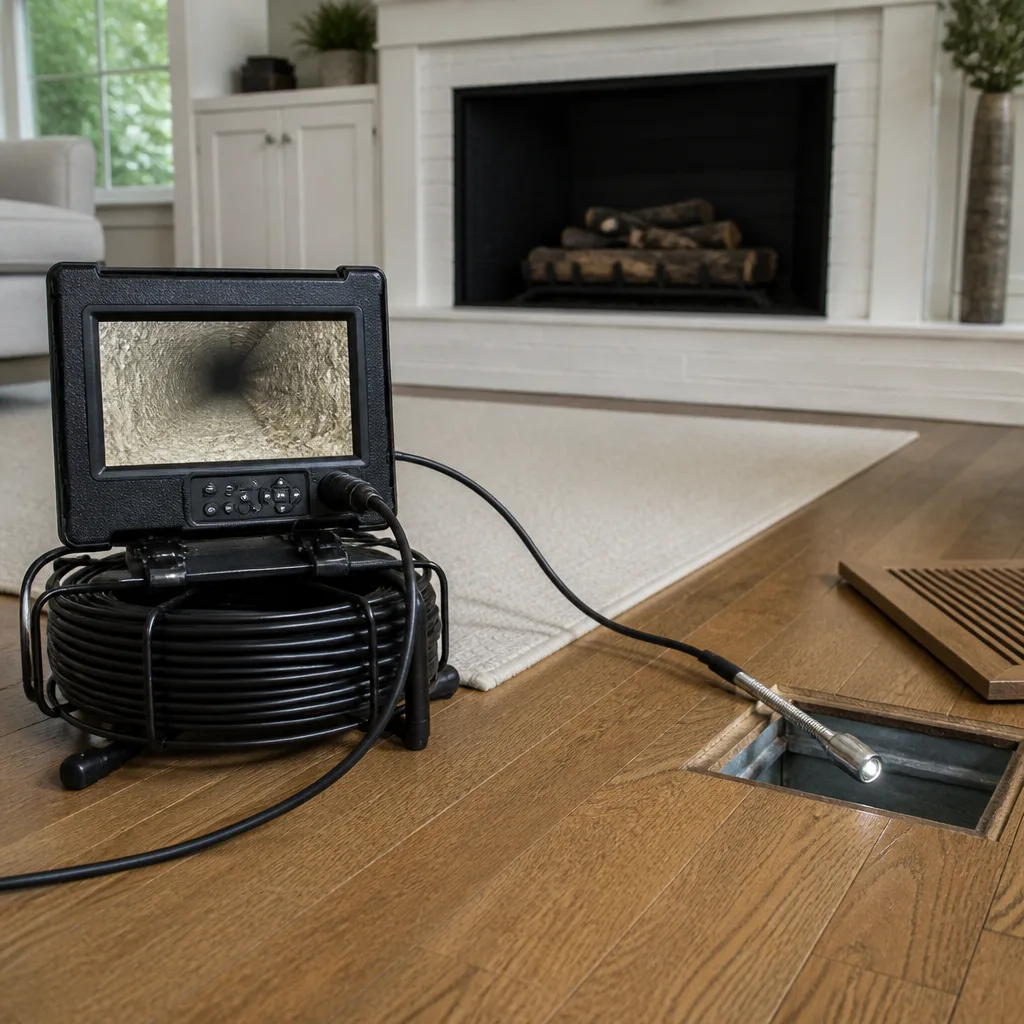 Camera inspection
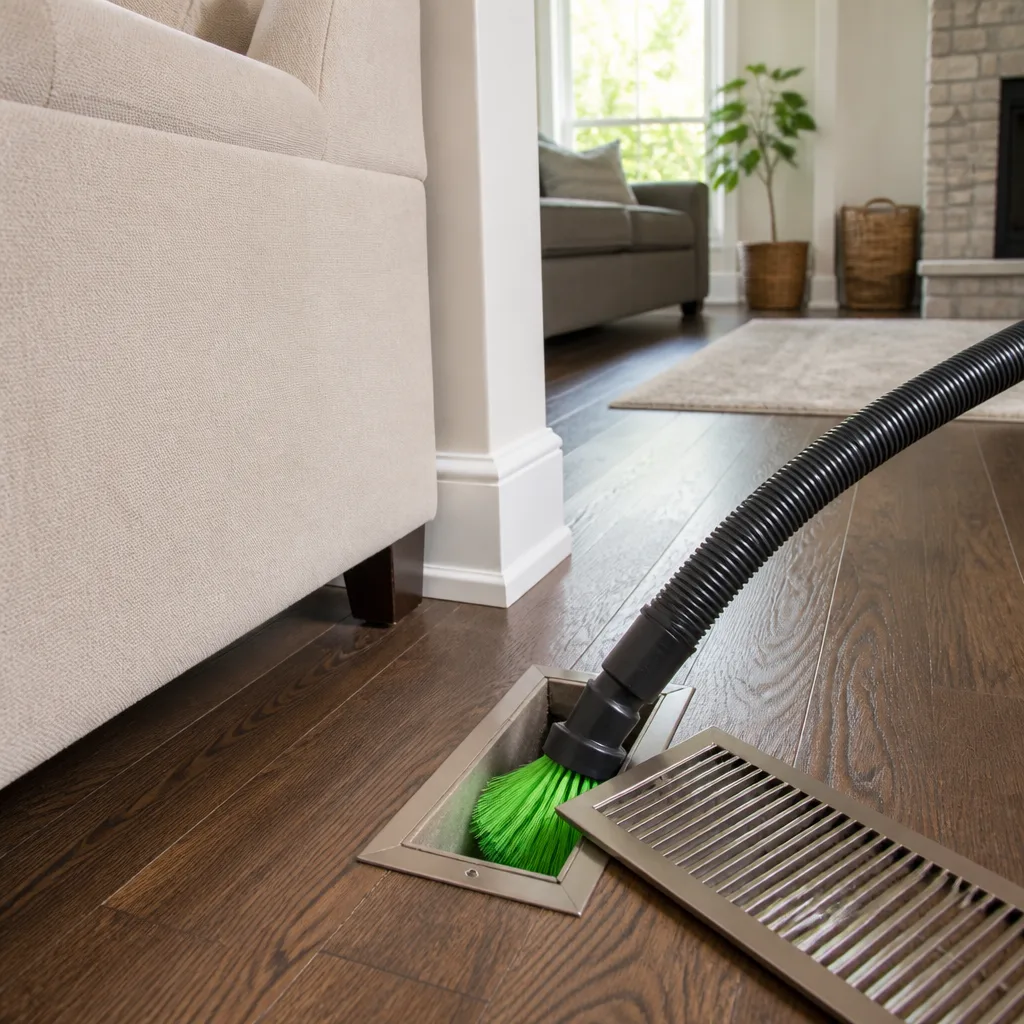 Sanitizing & deodorizing
Whole-system duct and dryer vent check with before-and-after photos - you see exactly what came out of your vents
That "$99 whole-house special" is a bait ad - the real number appears once they are in your hallway, or the "clean" is a shop-vac at the register. We photograph the inside of your ducts before and after instead.
Air Duct Cleaning Troubleshooting in Bellevue: Common Problems and How to Fix Them
A clogged or collapsed flex duct section can choke airflow to a room by roughly 60%, and your thermostat will never tell you that’s why one bedroom stays cold all winter. Most homeowners in Bellevue assume weak airflow, musty smells, or uneven heating mean the furnace is failing. More often the problem lives in the ductwork itself, and it’s diagnosable long before you call an HVAC tech. Your system is already broadcasting symptoms. This guide teaches you to read them: which odors point to which problems, how to test a suspicious joint with a dollar bill and a phone flashlight, and how to tell a problem you can monitor from one that needs a professional now.
Quick Answer
Most air duct problems in Bellevue come down to four fixable causes: disconnected or collapsed flex duct, leaky joints that bleed conditioned air into crawlspaces and attics, accumulated dust and debris feeding allergies, and moisture that lets mold take hold in the duct lining. You can spot many of them yourself with a flashlight, a dollar bill, and a few minutes at each register. The ones that need a professional right away are mold growth, rodent activity, and damaged insulation on older ductwork. Cleaning fixes debris; repair and sealing fix the leaks and disconnections that let the debris back in.
Styles & brands we work with
- Whole-home duct cleaning
- Dryer vent cleaning
- Camera inspection
- Sanitizing & deodorizing
Table of Contents
- What Are Your Ducts Trying to Tell You? A Symptom-to-Cause Map
- How Do You Test a Duct Joint Without Tools?
- Why Is One Room Always Colder Than the Rest?
- What Do the Different Duct Smells Actually Mean?
- When Is Moisture or Mold in Your Ducts a Real Problem?
- How Do You Know Whether to Monitor or Call Now?
- Why Cleaning Debris Isn’t the Same as Fixing the Problem
- What Should a Post-Cleaning Inspection Actually Reveal?
What Are Your Ducts Trying to Tell You? A Symptom-to-Cause Map
Duct problems announce themselves through a small set of symptoms, and each symptom narrows the likely cause fast. The trick is to stop treating every complaint as “the furnace” and start matching the symptom to the part of the system that produces it. Here’s the mapping we walk Bellevue homeowners through most often.
- Weak airflow at one or two registers, strong elsewhere: a disconnected or crushed flex duct run, or a damper that’s closed or broken.
- Weak airflow everywhere: a clogged main trunk, a failing blower, or a filter that hasn’t been changed.
- Musty smell when the system runs: moisture and microbial growth in the duct lining, insulation, or evaporator coil area.
- Dusty film returning days after cleaning a room: leaky return ducts pulling attic or crawlspace air into the system.
- Whistling or rattling at a register: a joint that’s come apart or a damper set too far closed.
- Uneven temperatures room to room: duct balancing or sealing, more often than furnace capacity.
Two or three of these showing up together usually point at the same underlying run or joint. Our technicians have up to 12 years of experience reading these patterns, and the diagnostic order rarely changes: airflow first, then odors, then dust and moisture. That order keeps you from paying for a cleaning when what you actually need is a repair.
Bellevue’s mix of older mid-century homes and newer construction means both failure modes show up on the same street. Homes built decades ago often have duct systems that were never properly sealed, while newer builds can hide a crushed flex run behind drywall that was pinched during installation. Neither is a furnace problem, and neither gets better by turning up the thermostat.
How Do You Test a Duct Joint Without Tools?
You can check the most common duct failure – a separated or leaking joint – with nothing more than a dollar bill and your phone’s flashlight. This is the test we suggest to Bellevue homeowners before they schedule anything, because it tells you whether you’re chasing a duct problem or something else.
- Turn the system to fan-only. You want continuous airflow, not a heat or cool cycle.
- Hold a dollar bill across the register grille. A healthy supply register should hold the bill flat against the grille with steady suction or push. If the bill flutters or drops, airflow is weak at that point.
- Repeat at every register in the house. Note which ones are strong, weak, or dead. The pattern matters more than any single reading.
- Shine your phone flashlight into the register boot. Look for a gap where the boot meets the floor or wall, visible dust streaks, or a flex duct that’s kinked, crushed, or pulled loose from the boot collar.
- Check the return grilles the same way. A weak return starves the whole system and throws off every supply register downstream.
If one register is weak while its neighbors are strong, the problem is almost always that run, not the furnace. A crushed flex section or a joint that slipped off the boot collar will read exactly that way. If every register is weak, look at the filter and the main trunk first. This test won’t find every problem, but it separates a single-run issue from a whole-system one, which is the decision that saves you the most money.
Why Is One Room Always Colder Than the Rest?
Uneven room temperatures in Bellevue homes are usually a duct balancing or sealing problem, not a furnace capacity problem. That’s the single most expensive misdiagnosis we see: a homeowner replaces equipment when the real fix is a disconnected run, a badly balanced damper, or a return that’s undersized for the room.
A few things drive the difference:
- Damper position. Manual dampers in the branch ducts may be set to starve one side of the house. Contractors balance them once at install and they don’t always stay put.
- Disconnected or crushed runs. A flex duct that slipped off its collar delivers little to no air to that room while the rest of the system looks fine.
- Leaky joints and boots. Air that escapes through gaps in the boots and trunk never reaches the living space, so the room starves while the furnace works harder.
- Return path issues. A room with a supply but no adequate return path pressurizes and stops accepting air. That’s a design and sealing issue, not capacity.
- Sun exposure and window orientation. A west-facing room in a Bellevue summer can run several degrees warmer from solar gain alone. That’s the house, not the ducts.
The tell for a duct problem is consistency. If the room is cold whether the furnace has been running five minutes or an hour, and stays cold in mild weather too, the air simply isn’t arriving. If it’s only cold on the coldest days, you may have a genuine capacity shortfall. Most of what we see in Bellevue falls into the first bucket, and it’s fixable at the duct level.
What Do the Different Duct Smells Actually Mean?
Each odor that comes out of a duct points at a different cause, and the fix path is different for each. Getting the smell right saves you from cleaning a system that actually needs a repair, or sealing a system that actually needs sanitizing.
- Musty, damp, or earthy: moisture and microbial growth in the duct lining, insulation, or the coil area. This is the mold-flag smell and it deserves a real inspection, not a spot clean.
- Dusty or stale: debris accumulated in the trunk and branch ducts, common in homes that haven’t had air duct cleaning in years. Usually a cleaning job.
- Burning or hot-plastic: stop the system and call a technician. That’s typically a component-level problem – blower motor, wiring, or a heat exchanger – and it belongs with a qualified HVAC pro, not a duct cleaning.
- Chemical or solvent-like: off-gassing from new construction materials, paint, or adhesives pulled through returns. Ventilation and filtration help, but check that it’s not a refrigerant or electrical issue first.
- Rodent or ammonia odor: animal activity in the ductwork or the crawlspace feeding it. This needs immediate professional attention and safe contaminant handling.
In our experience across Bellevue, the musty smell is the one homeowners sit on longest and the one worth acting on soonest. It rarely clears on its own, and moisture that supports growth in the lining usually means the system is pulling in humid air somewhere it shouldn’t. That’s where professional sanitizing with equipment built for contaminant control, like the Abatement Technologies line we use, changes the outcome.
When Is Moisture or Mold in Your Ducts a Real Problem?
Mold in ductwork is a genuine call-now problem, not a monitor case. Visible growth, a musty odor that persists after cleaning, or damp insulation around the ducts means moisture is entering the system somewhere, and the fix is contamination control plus the repair that stops the moisture source.
Bellevue winters keep humidity high and bring long stretches of rain, so crawlspaces and attics stay damp for months. Duct systems routed through either space can pick up condensation on cold metal, especially where insulation is torn or missing. That condensation is a growth medium. The cleaning removes the contamination; sealing and repairing the duct run stops the next round.
Watch for these warning signs and don’t wait on them:
- Dark staining or fuzzy growth visible inside a register boot.
- A musty smell that returns within days of a cleaning.
- Water staining on duct insulation or the trunk.
- Condensation on the ducts themselves during the heating season.
- Allergy symptoms that flare when the system starts and ease when it stops.
The same goes for rodent activity. Droppings, gnaw marks on flex duct, or nesting material in a return mean contamination that should be handled by technicians with the right protective equipment. Don’t vacuum it yourself. And if your home has ductwork from an older era with suspect insulation or wrap, have it inspected before anyone cuts into it; vintage materials require care and, in most jurisdictions, testing by a qualified professional if there’s any doubt. Most cities require a permit for structural changes to ductwork, so ask Bellevue’s building department before a major reroute.
How Do You Know Whether to Monitor or Call Now?
Some duct problems are watch-and-see, and some need professional intervention before they get worse. Sorting them into these two buckets is the most useful thing a Bellevue homeowner can do after reading the symptom map.
- Monitor: a single weak register you can still feel air at, mild dust return that’s not accelerating, a faint stale smell that clears after filter changes, seasonal temperature variation that tracks sun exposure.
- Call now: visible mold or a persistent musty smell, rodent droppings or gnaw damage, burning or ammonia odors, a completely dead register, water in or on the ducts, and any ductwork you suspect predates modern insulation standards.
The dividing line is safety and escalation. Dust and single-room airflow problems are unlikely to hurt anyone while you wait, and they’re cheap to diagnose. Contamination and complete airflow loss get worse with every cycle, and the longer they run, the more of the system has to be cleaned, sanitized, or replaced.
If you’re not sure which bucket you’re in, that’s the moment to call. Bellevue Air Duct Cleaning Co offers free estimates, so a diagnosis costs you nothing and settles the question either way. We answer 24/7, and fast dispatch runs from 7am to 7pm, Sunday through Friday.
Why Cleaning Debris Isn’t the Same as Fixing the Problem
Cleaning removes debris; repair and sealing remove the reason the debris is there. That’s the distinction most duct cleaning companies skip, and it’s why a homeowner can pay for a cleaning, see improvement for a month, and watch the same symptoms come back. A crushed or disconnected run still won’t deliver air no matter how clean it is. A leaky trunk still pulls attic dust into the system. A damp joint still grows whatever it can.
The full fix is a sequence:
- Clean the system using professional-grade equipment – the Rotobrush and Nikro systems we run, the same tools trusted by restoration and remediation contractors – so the debris is actually evacuated, not stirred up.
- Inspect and repair the disconnected, crushed, or damaged duct runs and boots. We offer duct repair and sealing alongside cleaning for exactly this reason.
- Seal the joints and boots so conditioned air stays where it’s supposed to. This is where the airflow and temperature complaints actually get solved.
- Sanitize where contamination warrants it, using equipment built for the job. Abatement Technologies gear is designed for serious contaminant control.
- Verify airflow across the system after the work, register by register, and check the temperatures again.
That’s also why one call covers cleaning, repair, sealing, and air quality. Wiring a home’s air-quality ecosystem properly means understanding components together, which is why we work with Honeywell and Aprilaire products – the thermostat, the filtration, and the ductwork all interact. Clean ducts are only half the job.
What Should a Post-Cleaning Inspection Actually Reveal?
A real post-cleaning inspection shows you before-and-after photos of your own ducts, and it verifies that the root cause you flagged at the start is actually resolved, not just that debris got vacuumed. If anyone hands you an invoice with no photos and no answer about the root cause, you haven’t been given an inspection. You’ve been given a cleaning.
Here’s what the inspection should cover, and it’s what we walk Bellevue customers through:
- Before-and-after photos of the trunk, branch runs, and the register boots that caused the call. Your ducts, not a stock image.
- Confirmation of the root cause. If the problem was a disconnected run, the inspection shows the repaired and sealed joint. If it was moisture, it shows the sanitized lining and the fix that stopped the moisture.
- A register-by-register airflow check. The dollar-bill test you did before the work gets redone after. Weak registers should read measurably better.
- Condition of the accessible ductwork. Any crushing, torn insulation, or damaged runs still open should be reported before the technician leaves.
- Filter status and any compromised components that will cause a repeat problem if not addressed.
The single best way to verify a cleaning company actually fixed the root issue is to ask them, up front, whether they inspect and repair duct runs as part of the service. A company that only vacuums won’t be able to show you the sealed joint, because they didn’t seal it. The work should be explainable and verifiable from the photos.
Common Mistakes to Avoid
- Blaming the furnace before testing the ducts. Run the dollar-bill test at every register before you call an HVAC tech. One weak register with strong neighbors is a duct problem, and a furnace replacement won’t fix it.
- Buying a cleaning when you need a repair. If the symptom is airflow loss from a single run, cleaning debris out of a disconnected duct doesn’t reconnect it. Ask whether repair and sealing are included.
- Ignoring a musty smell because it “comes and goes.” In a wet Bellevue winter, persistent mustiness usually means active moisture. Monitor the smell and it monitors your growth.
- Assuming a coupon price covers the whole system. Per-vent teaser pricing is a different job than whole-system cleaning. Ask for a flat price per system before work starts.
- Skipping the return side. Strong supply at every register with weak returns starves the system. Check the returns with the same care.
- Letting a crawlspace or attic duct run stay wet. Damp insulation feeds growth and undoes every cleaning. Fix the moisture source, not just the mold.
- Vacuuming rodent droppings yourself. Contamination from animal activity belongs with technicians who carry the right protective equipment. Don’t handle it.
See the difference
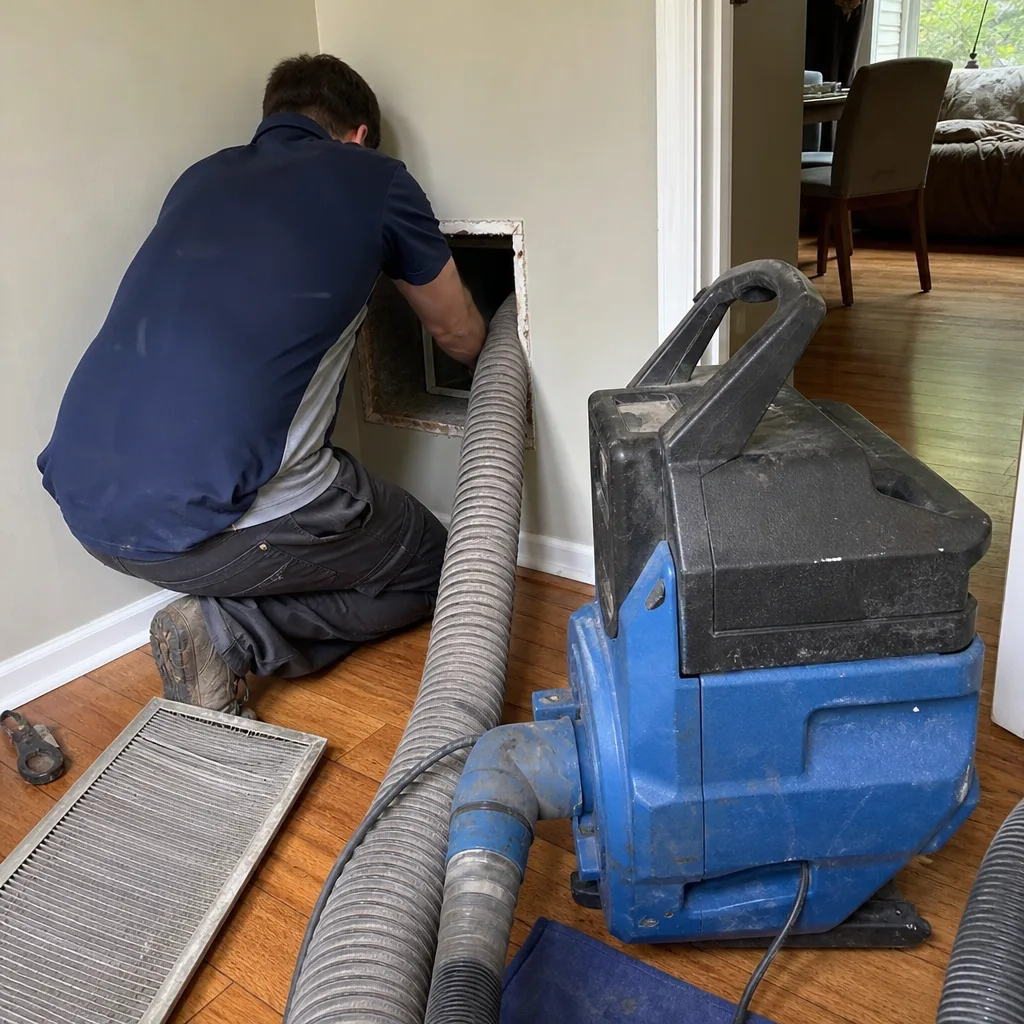 Before
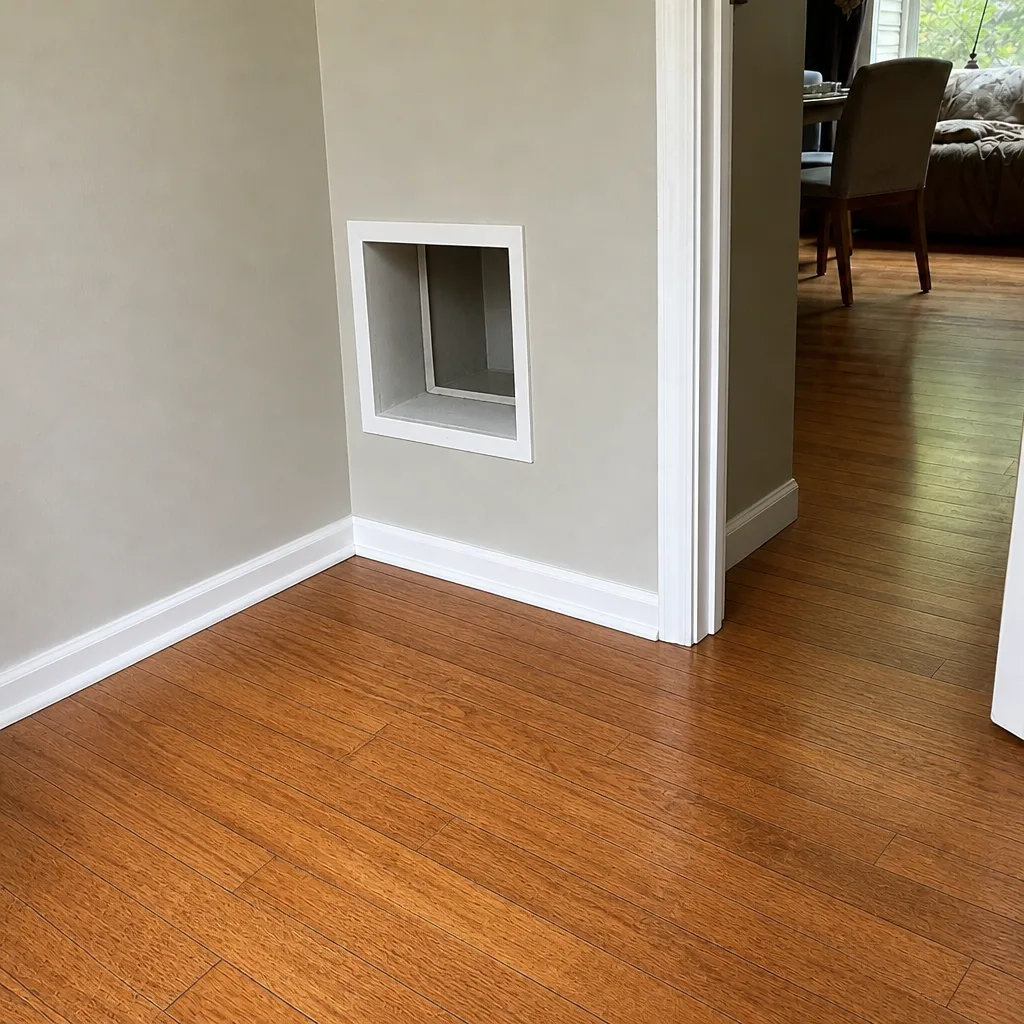 After
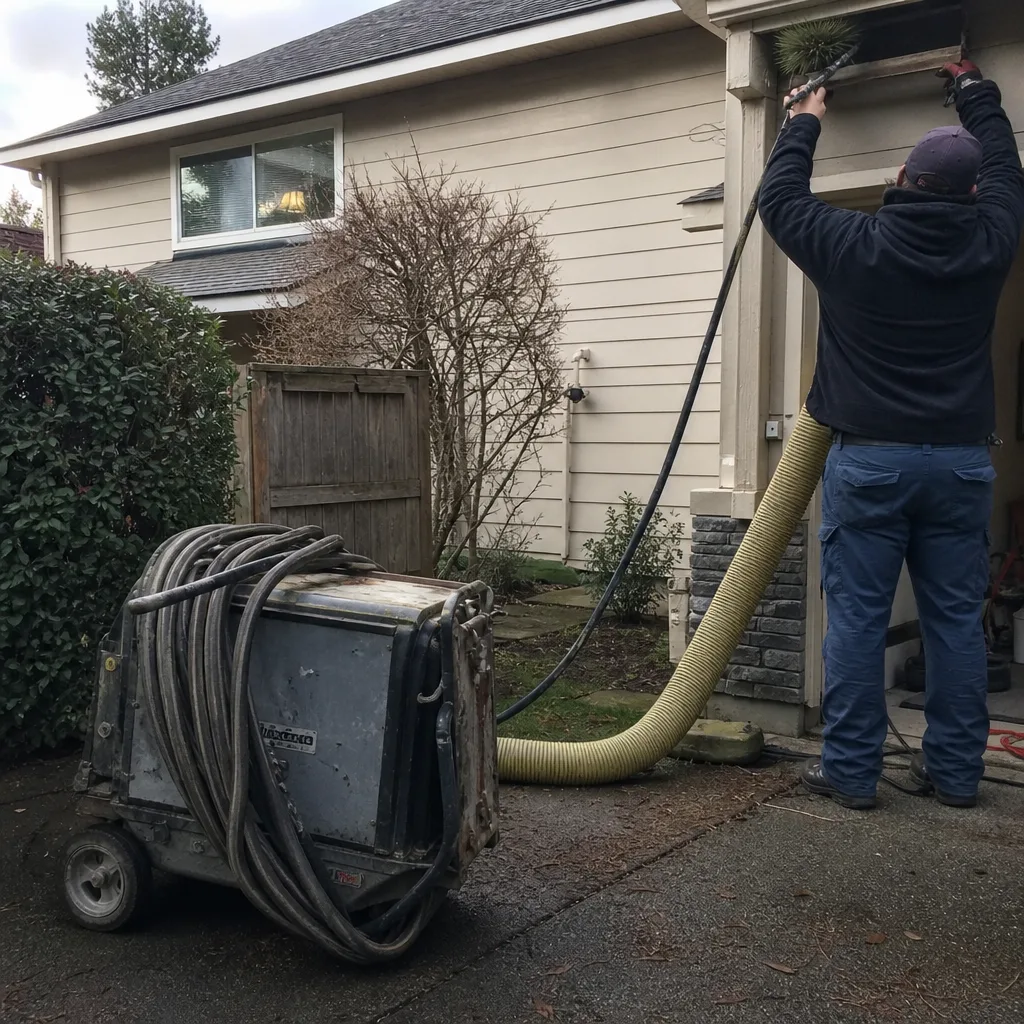 Before
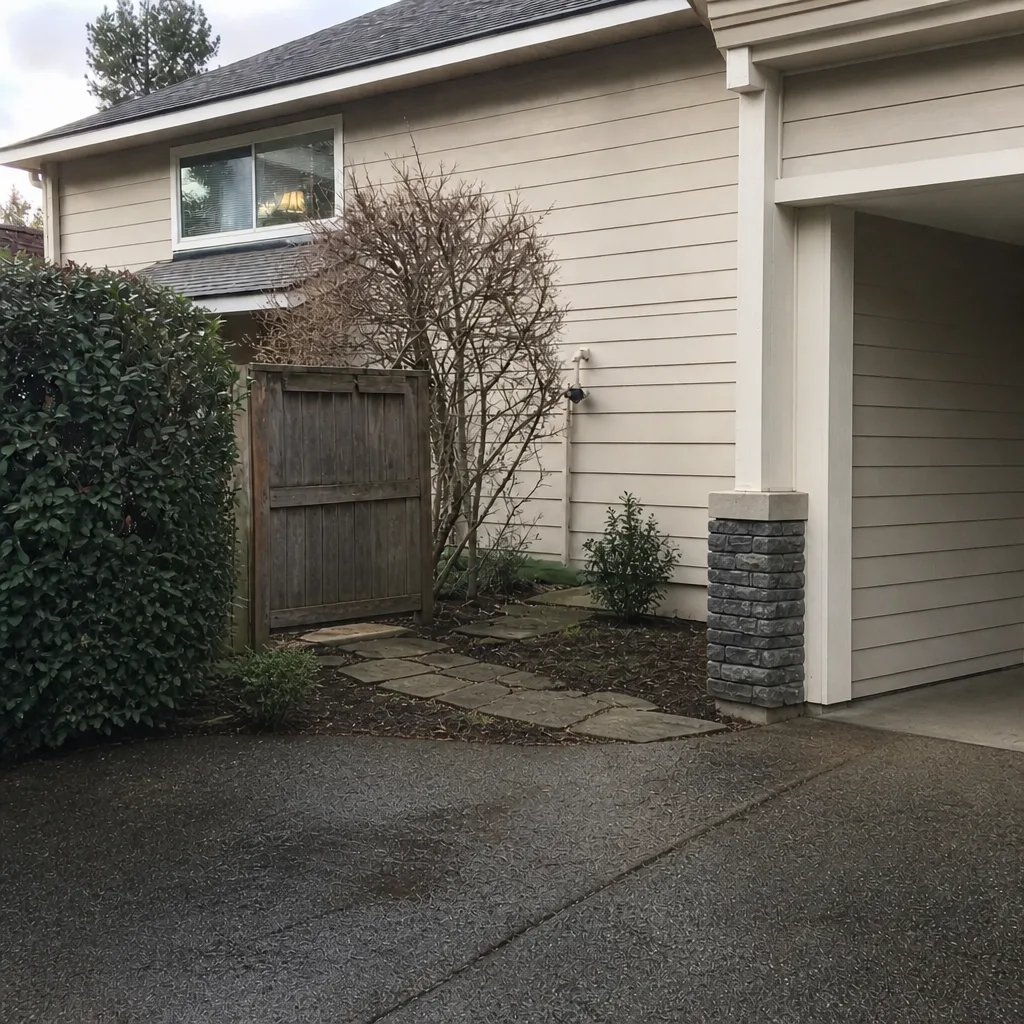 After
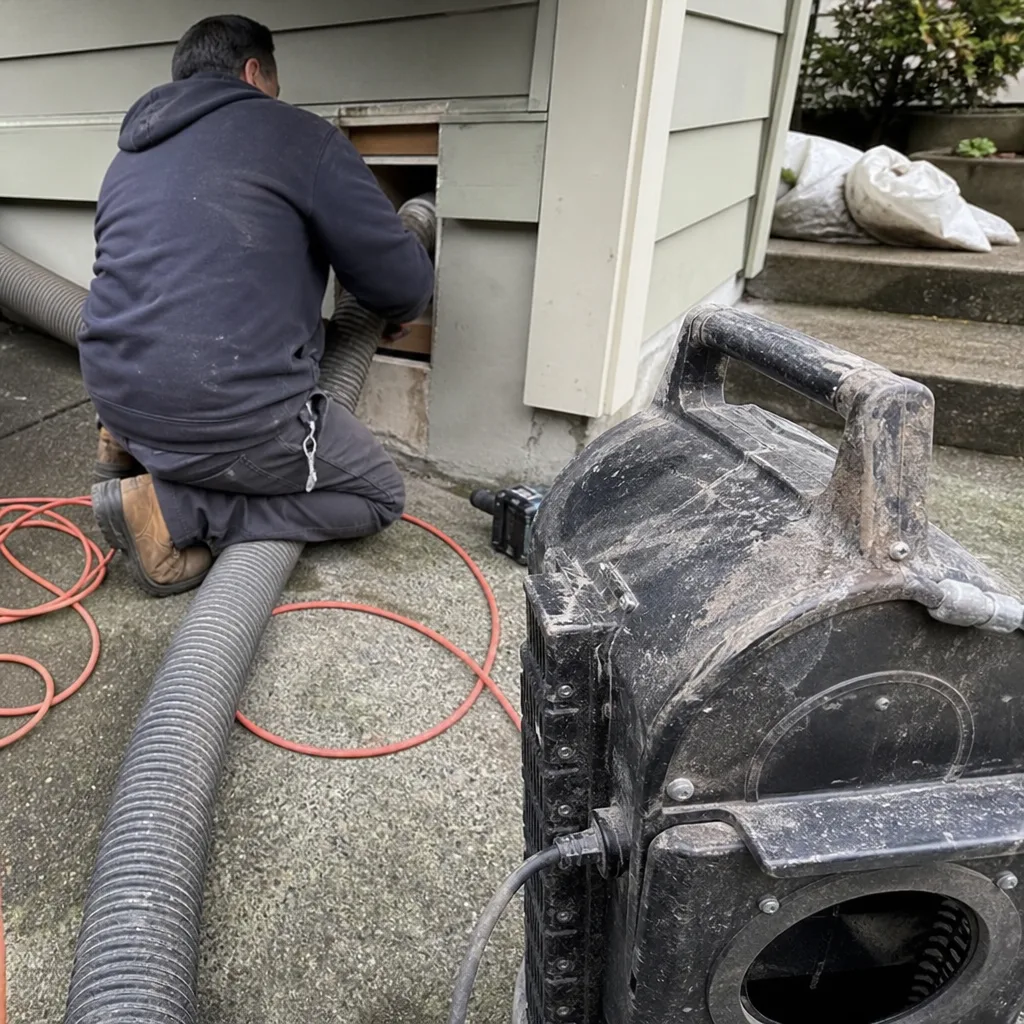 Before
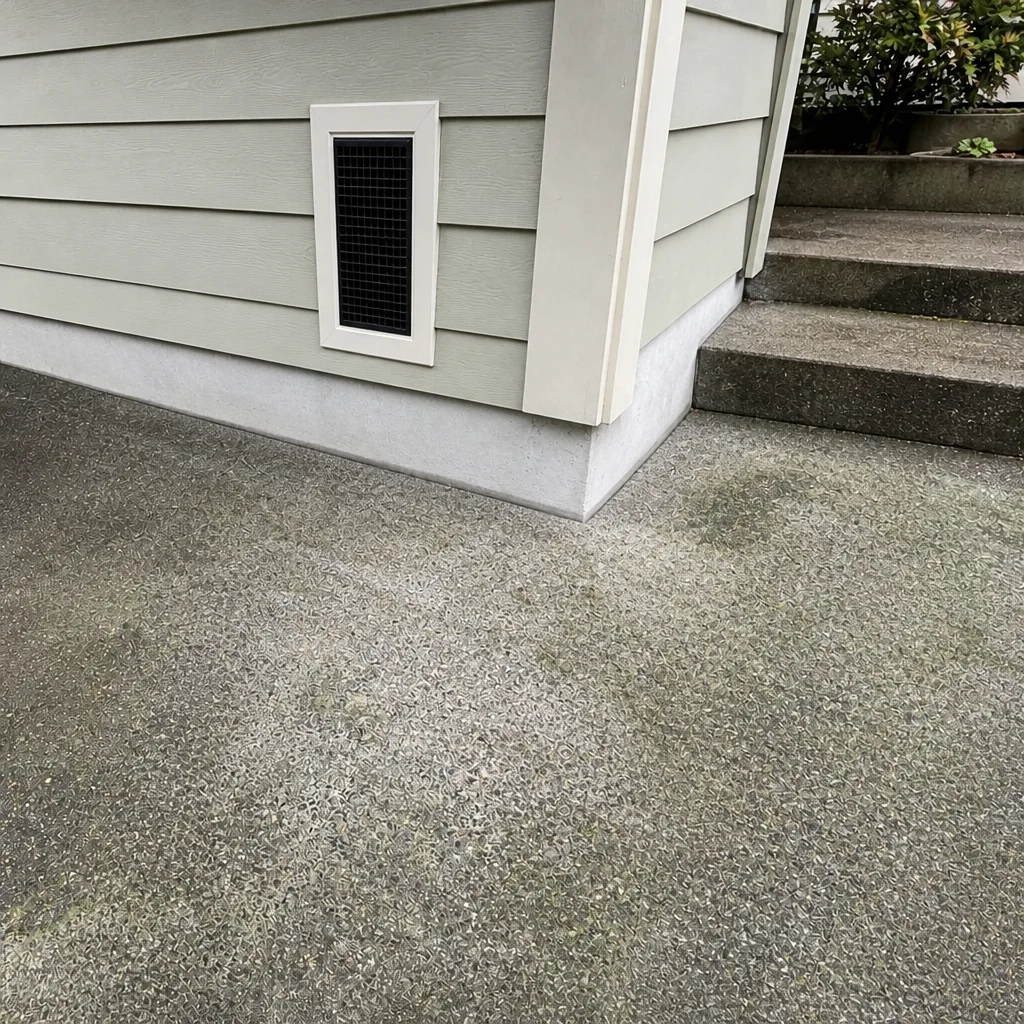 After
When to Call a Professional
Call a professional when the dollar-bill test shows a dead register with strong neighbors (likely a disconnected run), when you see visible mold or smell persistent mustiness, when there’s evidence of rodent activity in the ducts, or when your ductwork may be from an older era with wrap or insulation that needs inspection before anyone works on it. Also call if a single cleaning didn’t hold and the same symptoms came back within weeks. Those are the cases where cleaning alone won’t do it and repair, sealing, or sanitizing has to be part of the plan. Bellevue Air Duct Cleaning Co offers free estimates in Bellevue – call (888) 845-6042. We use professional-grade Rotobrush and Nikro equipment, and we repair and seal ducts as well as clean them. You’ll get one flat price per system, agreed before work starts, and before-and-after photos of your own ducts.
Frequently Asked Questions
Most whole-system air duct cleaning in Bellevue runs in the range of a few hundred dollars and scales with the size of the system and whether sanitizing or repair is part of the job. We give one flat price per system, agreed before work starts, so there’s no per-vent surprise on the invoice. The written estimate sets the final price. Call (888) 845-6042 for an exact quote – estimates are free.
Cheap quotes are usually a per-vent teaser price that doesn’t cover the whole system, and the price climbs once the technician is on site. The other difference is equipment: a shop vac and a hose can’t do what professional-grade Rotobrush and Nikro systems do. Ask any company for a whole-system price up front, in writing. Call (888) 845-6042 for a flat per-system estimate.
You should see before-and-after photos of your own ducts, not a stock image, along with a register-by-register airflow check that redos the dollar-bill test after the work. Ask whether the technician inspected and repaired the root cause. Call (888) 845-6042 and we’ll walk you through exactly what the inspection covers.
Most homes fall in a three-to-five-year window for a cleaning, and homes with pets, allergies, recent renovation, or a dusty crawlspace tend to need it on the shorter end. The bigger driver is sealing: a leaky system pulls dust back in fast, so repair and sealing extend the interval. Call (888) 845-6042 to talk through your home’s situation – estimates are free.
Yes – a badly crushed or disconnected flex run can take most of the air out of the room it serves, which is why one bedroom ends up cold while the rest of the house is fine. The fix is repair and reconnection, not a new furnace. Call (888) 845-6042 to get the run inspected.
We repair and seal ducts as well as clean them, plus we handle dryer vent cleaning and HVAC cleaning across the same system. That’s the point: cleaning alone doesn’t stop leaks or restore airflow. Call (888) 845-6042 for a free estimate on the full scope.
The Bottom Line
Most duct symptoms that look like furnace failures are diagnosable at the duct level with a flashlight, a dollar bill, and a little patience. Map the symptom to the cause: weak single registers point to a disconnected run, faint stale smells to debris buildup, persistent mustiness to moisture, and uneven temperatures to balancing and sealing rather than capacity. Know which problems you can monitor and which need a professional now – mold, rodents, and burning odors don’t wait. Cleaning removes the debris; repair and sealing remove the reason it came back, and that’s the combination that actually solves the problem. When it’s time, Bellevue Air Duct Cleaning Co is here to read the symptoms with you.
Bellevue homeowners can call (888) 845-6042 for a free estimate. We answer 24/7, with fast dispatch from 7am to 7pm, Sunday through Friday. You’ll get one flat price per system agreed before work starts, before-and-after photos of your own ducts, and technicians who use the same professional-grade equipment trusted by restoration contractors.
Written by the team at Bellevue Air Duct Cleaning Co.