
Last updated November 23, 2026
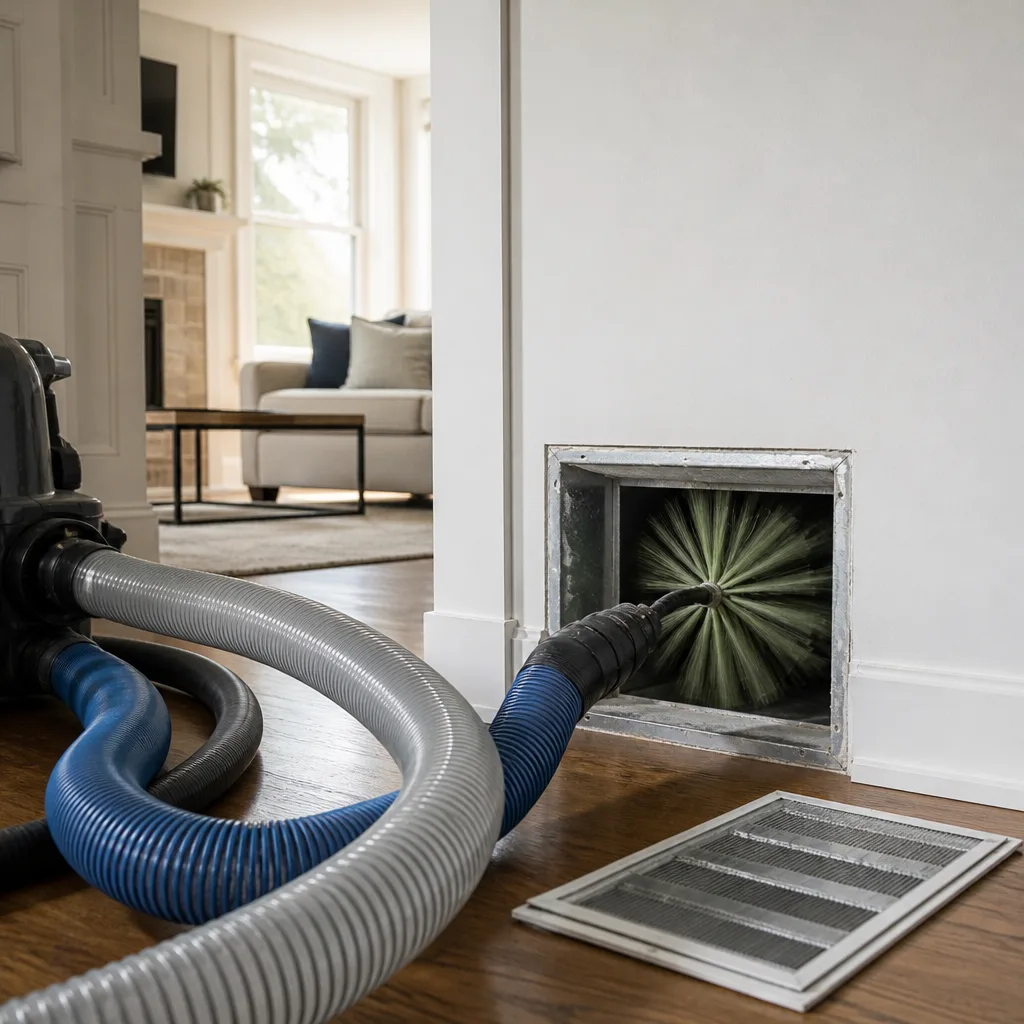 Whole-home duct cleaning
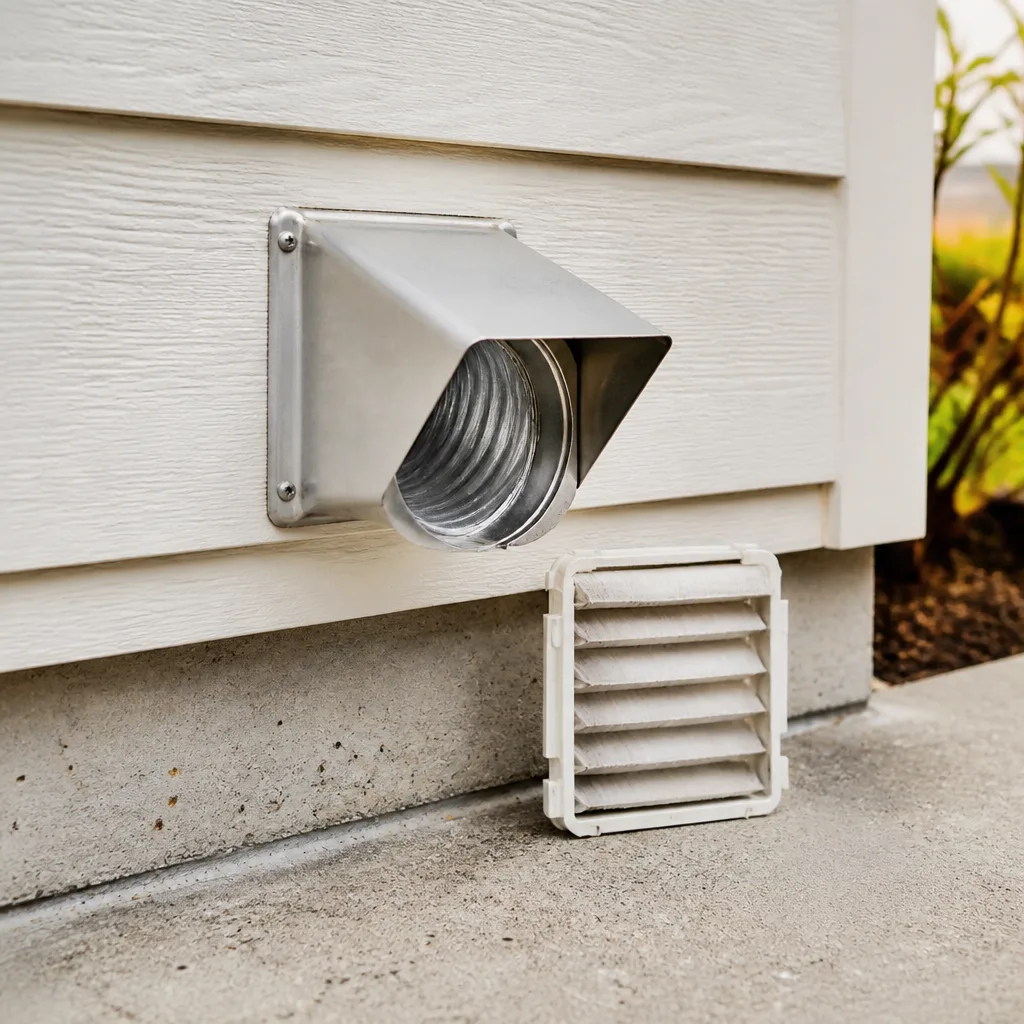 Dryer vent cleaning
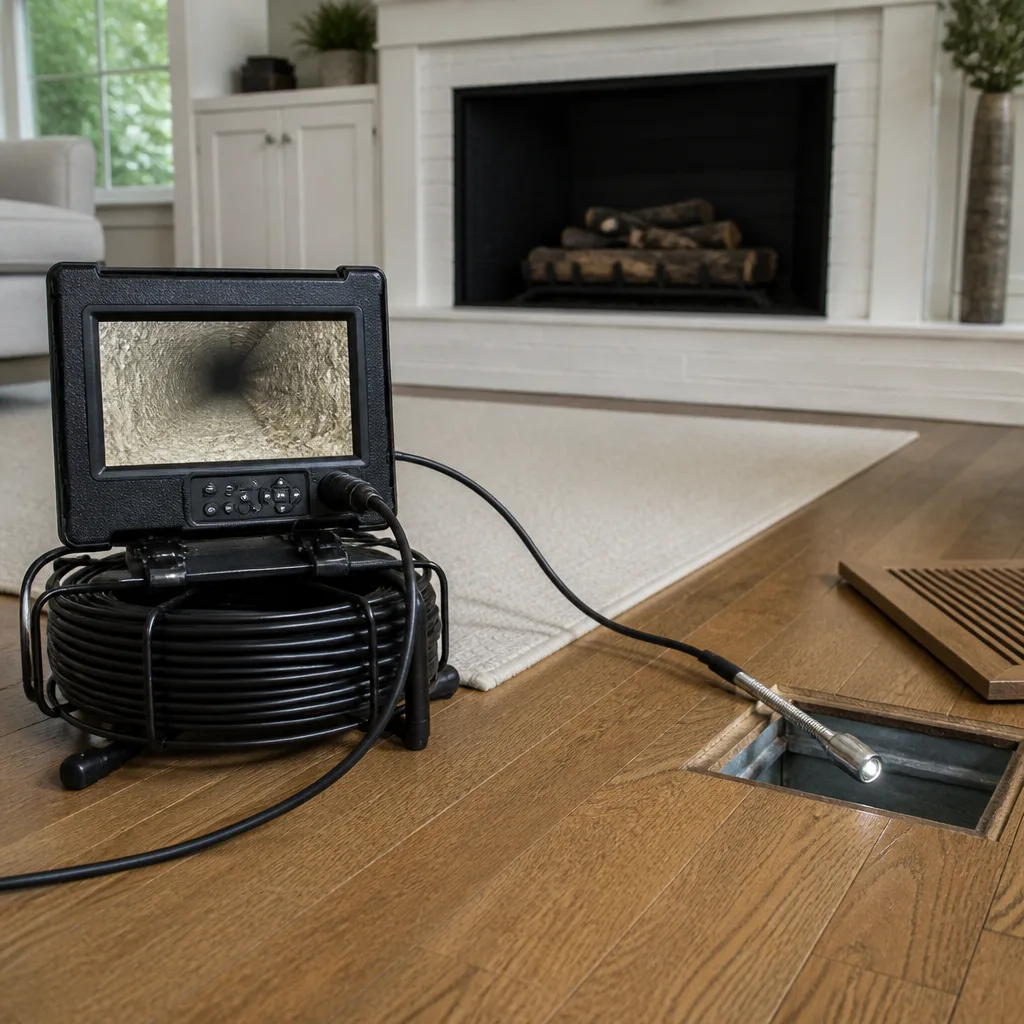 Camera inspection
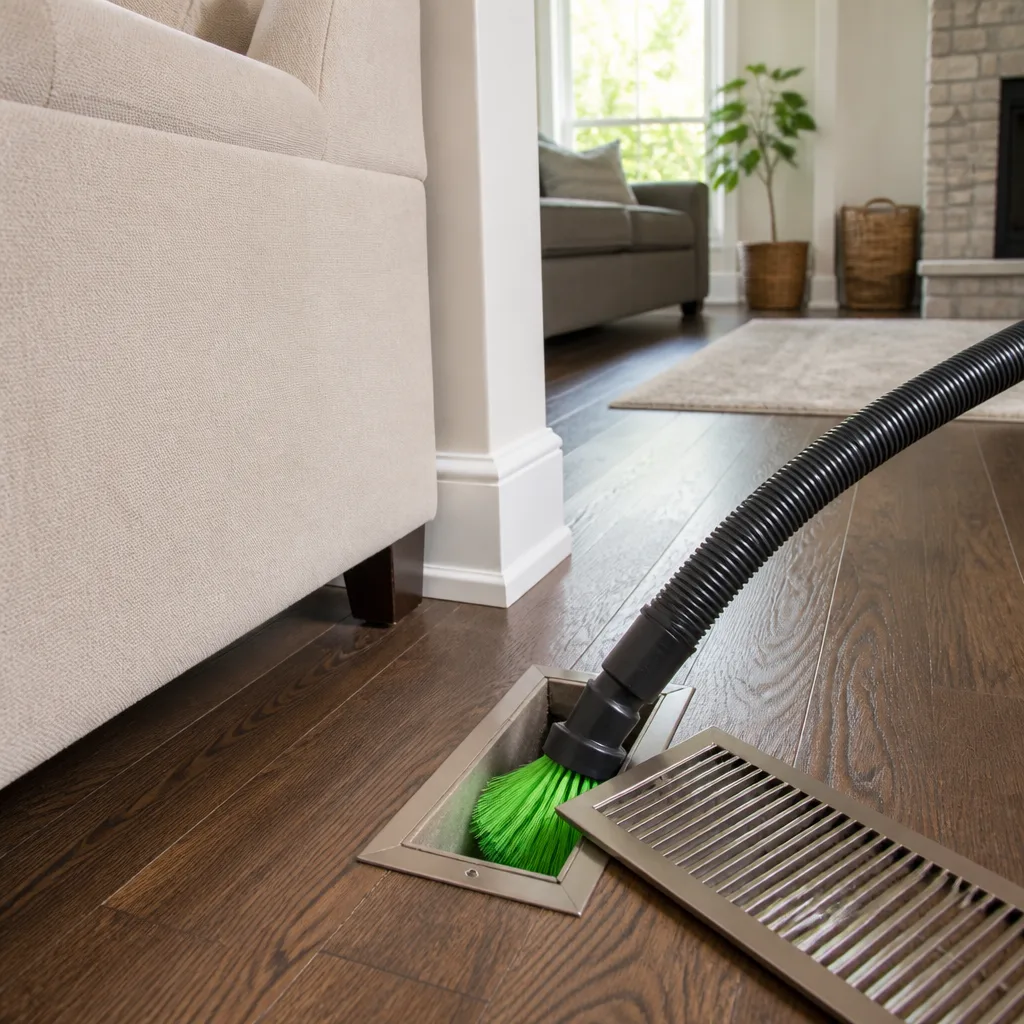 Sanitizing & deodorizing
Whole-system duct and dryer vent check with before-and-after photos - you see exactly what came out of your vents
That "$99 whole-house special" is a bait ad - the real number appears once they are in your hallway, or the "clean" is a shop-vac at the register. We photograph the inside of your ducts before and after instead.
Seasonal Air Duct Cleaning Care for Bellevue: Year-Round Homeowner’s Guide
Most homeowners treat duct cleaning as a number on a calendar: once a year, whenever the coupon shows up. That’s backwards. In Bellevue, what lands in your ductwork changes dramatically from month to month. August brings wildfire smoke filtered through returns that run all day. October brings wet leaves and the first closed-window heating season. April brings renovation dust from the remodel down the street. If you clean on a fixed schedule instead of one matched to what’s actually accumulating, you’re either cleaning too early or too late – and always paying for the wrong thing. This guide walks through a 12-month maintenance rhythm built around Bellevue’s real environmental calendar, so you know what to check and when. We’ll cover what each season deposits in your system, what to look for, and how to time professional service.
Quick Answer
Seasonal duct care in Bellevue means aligning inspections and cleaning with what’s actually entering your system each season rather than following a generic annual schedule. The highest-priority windows are late September (after wildfire smoke season clears), early November (before wet heating season begins and condensation risk rises), and late March (after renovation season peaks). A proper 12-month plan combines at least two professional assessments per year with simple homeowner checks between them.
Styles & brands we work with
- Whole-home duct cleaning
- Dryer vent cleaning
- Camera inspection
- Sanitizing & deodorizing
Table of Contents
- Why Bellevue’s Seasons Change What’s in Your Ducts
- Fall: Post-Wildfire-Smoke Filter and Duct Inspection
- Winter: Wet Heating Season and Crawl Space Condensation
- Spring: Renovation Debris and Pollen Load
- Summer: Pre-Cooling Coil and Drain Pan Inspection
- Building Your 12-Month Bellevue HVAC Calendar
- How to Read What Your Vents Are Telling You
- What a Full-System Approach Looks Like
Why Bellevue’s Seasons Change What’s in Your Ducts
Eastern Washington wildfire smoke doesn’t stop at the Cascades. During August and September, PM2.5 readings across Bellevue spike, and those fine particles load directly into duct systems through returns that run more than 10 hours a day. That’s a fundamentally different contaminant profile than what a homeowner in a coastal or desert market deals with, and it’s exactly why a national “clean every 3-5 years” rule of thumb falls apart here.
Think about what else shifts through the year. Bellevue’s wet fall and winter push heating systems into months of continuous operation while outside humidity climbs. Spring brings renovation season across neighborhoods like Bridle Trails, Crossroads, and Somerset, where remodel dust enters return grilles faster than any other time of year. Summer brings the pre-cooling inspection window that most homeowners skip entirely.
Each season leaves a different signature inside your ductwork:
- Fall: fine grey particulate from smoke infiltration, often settling as a uniform film rather than localized dust
- Winter: moisture-driven condensation in unconditioned runs, plus the musty signature of early biological growth
- Spring: coarse drywall and wood dust from construction, plus a heavy pollen load pulled in through returns
- Summer: deferred coil and drain-pan neglect that turns into cooling failures in August
The principle is simple: your HVAC system doesn’t treat every month the same, so neither should your maintenance. If you want a broader overview of what professional service entails, our guide to air duct cleaning covers the core process. But the seasonal timing is what this page is about.
Fall: Post-Wildfire-Smoke Filter and Duct Inspection
Late September and early October is the single most important inspection window on the Bellevue calendar. Wildfire smoke season has just ended, heating season is about to start, and your duct system has spent the last two months pulling in whatever was in the outside air.
Here’s what to look for when you open a return grille or check your filter in the fall:
- Uniform grey film on duct interiors or grille surfaces: a signature of smoke particulate that settled as air slowed through the system. Normal dust looks brownish and tends to collect in patches near grilles.
- A filter that looks greyer and heavier than usual: smoke particles load filters faster than household dust, especially a standard 1-inch filter.
- Fine residue on the coil face or blower compartment: a warning sign that particles made it past the filter.
- Return grilles with visible dark staining: often the first place smoke residue shows before you notice anything else.
The critical point: you can’t clean smoke particulate out of ductwork with a shop vac or a consumer-grade unit. Fine PM2.5-sized particles coat surfaces and remain suspended unless the system is agitated with professional equipment and pulled under negative pressure. That’s why we work with Bellevue Air Duct Cleaning Co-grade Rotobrush and Nikro systems – the same tools restoration contractors rely on for post-fire work – rather than anything you’d rent at a hardware store.
Your fall checklist:
- Replace the filter immediately after smoke season ends, before you start heating.
- Check return grilles and any accessible duct openings for grey film or dark staining.
- Schedule a professional inspection if your home is older, or the filter loaded unusually fast.
- Book any duct repair or sealing work now, before wet weather makes crawl space access harder.
- Note any smells when the heat first comes on – a smoky or burning odor often means residue is being heated.
Winter: Wet Heating Season and Crawl Space Condensation
Bellevue’s wet winter creates a specific duct problem that dry climates never see: condensation inside unconditioned ductwork, especially in crawl spaces and attic runs. When warm air travels through a cold duct exterior, moisture forms on the interior surfaces. That moisture is the precursor condition for mold in ductwork – not mold itself, but the environment that allows it to develop.
What “mold precursor conditions” actually look like when you check:
- Visible condensation or dampness on the outside of duct runs in crawl spaces, especially flexible duct with damaged insulation
- Musty odors when the furnace runs, strongest near floor vents in lower rooms
- Loose, sagging, or torn insulation on flexible duct runs – a common crawl space finding in older Bellevue homes
- Dark spotting on framing or insulation near duct penetrations, which points to moisture problems beyond just the ducts
This is where duct repair and sealing matters as much as cleaning. Clean ducts are only half the job. If a run is unsealed, leaking at joins, or has damaged insulation, it will pull in crawl space air – which is damp, musty, and loaded with whatever is growing on the wood down there. No amount of cleaning fixes a duct that keeps drawing that air in.
Our approach pairs HVAC cleaning with duct repair and sealing so the root cause gets addressed, not just the symptom. If you notice a musty smell in a Bellevue home during the wet months, that’s the time to act – delaying until spring usually means the moist conditions have had four more months to work on the surfaces inside your system.
Winter homeowner checks worth doing:
- Walk the crawl space or attic and look for wet or sagging duct insulation.
- Smell each room’s air at the vents separately – musty odor concentrated at floor level is a warning sign.
- Check that all floor and wall grilles open fully and haven’t been blocked by furniture.
- Schedule a professional assessment if you notice recurring odors or unexplained humidity.
Spring: Renovation Debris and Pollen Load
April and May in Bellevue are renovation season. Kitchens come out, bathrooms go in, and drywall dust finds its way into every return grille in the house. HVAC systems often run during remodels, and when they do, they pull construction dust into the ductwork faster than any other event on the calendar. A single kitchen remodel can load a home’s entire duct system with fine drywall particulate in a matter of weeks.
At the same time, spring brings its own pollen load, and Bellevue’s mature tree canopy in neighborhoods like Bridle Trails and Somerset generates plenty. Pollen enters through return grilles the same way smoke does – filtered or not, some fraction always makes it past.
If you’re planning or finishing a remodel, this is the sequence that works:
- Before demo: close and tape over returns in the work area, and change the HVAC filter.
- During construction: keep the system running but check the filter every two weeks and change it whenever it looks loaded.
- After final dust settles (typically 1-2 weeks post-completion): schedule a professional cleaning. Cleaning immediately after demo but before final construction dust settles usually means you clean twice.
- After cleaning: replace the filter one more time and note the date.
Why not just clean at the end of every spring? Because a remodel year is different from a normal year, and the cleaning window shifts. General spring pollen warrants an inspection in most Bellevue homes, but a remodel justifies a fuller clean. Air quality matters most during and just after the dust concentration peaks, which is why we time our work to the project rather than the season.
Spring is also the right season to check your dryer vent. Lint accumulates year-round, but the increase in laundry during the wet months, combined with spring cleaning cycles, means most homes have noticeable buildup by April. Our dryer vent cleaning service addresses this in a single visit – and it’s a genuinely different job from duct cleaning, with different equipment and different safety considerations.
Summer: Pre-Cooling Coil and Drain Pan Inspection
Summer is the most-skipped inspection window, and it’s the one that costs the most when skipped. Before the cooling season hits its peak, the evaporator coil and the condensate drain pan need to be checked. If the coil is fouled with dust, the system strains to cool and airflow drops. If the drain pan is clogged or the drain line is blocked, water backs up – and that can lead to water damage, not just poor cooling.
By mid-August, the calls we take are almost always one of two types: “it’s not cooling well” or “there’s water around the furnace.” Both usually trace back to a coil or drain issue that a May inspection would have caught. Bellevue summers aren’t extreme, but they’re warm enough that HVAC systems run long hours, and long hours amplify any existing contamination.
What to check before summer:
- Condensate drain pan: look for standing water, rust, or debris. Should be dry and clean before cooling season starts.
- Drain line: ensure it flows freely. A quick test with a cup of water poured slowly into the pan drain connection tells you whether the line is clear.
- Coil face: if visible from an access panel, look for a grey film of dust. A dirty coil significantly reduces cooling efficiency.
- Return air filter: replace it, then again about halfway through summer if you’re running the system continuously.
If you notice any of these issues, this is a professional inspection and cleaning job. Coil cleaning requires care, and the coil sits inside equipment where careless access can damage refrigerant lines. Our technicians have up to 12 years of experience, and we work with Honeywell and Aprilaire products because we understand the full air-quality ecosystem, not just the ductwork in isolation. A pre-season check in May or early June is much cheaper than an August emergency call.
Building Your 12-Month Bellevue HVAC Calendar
A calendar built around Bellevue’s specific environmental rhythm looks different from a generic national template. Here’s the month-by-month structure that reflects what actually accumulates in local duct systems:
- January: Mid-winter check – filter change, quick visual inspection of crawl space ducts for condensation. No professional service unless problems were flagged in the fall.
- February: Continue heating season checks. Note any new musty odors and record which rooms they concentrate in.
- March: Renovation season begins. If you’re planning a project, tape returns in work areas and increase filter change frequency.
- April: Post-renovation cleaning if you had a project. Pollen inspection for non-renovation homes.
- May: Pre-summer professional inspection – coils, drain pan, and full system check.
- June: Filter change at the start of the cooling season. Check that all vents are open and unobstructed.
- July: Mid-summer filter check. Look for reduced airflow or uneven cooling across rooms.
- August: Peak cooling plus wildfire smoke season. Filter change mid-month if smoke is in the air. Note any smoky smells near returns.
- September: Smoke season winds down. Replace the filter and schedule fall professional inspection.
- October: Post-wildfire professional cleaning if indicated. Duct inspection for crawl space issues before wet weather.
- November: Heating season begins. Watch for smoky or dusty odors at first heat-up – usually residue burning off, but persistent smells mean dirty ducts.
- December: Filter change, quick check of accessible ductwork, note any new condensation.
Two professional visits per year is the realistic minimum for a Bellevue home – spring and fall. Homes in higher-pollen neighborhoods, homes with pets, older homes with unsealed ductwork, and homes that just finished a remodel may need more. The calendar isn’t a rigid rule; it’s a rhythm that tells you when to look.
How to Read What Your Vents Are Telling You
Before you call anyone, your own vents can tell you a lot. Here’s what different visible signs typically mean:
- Light, even brown dust: normal accumulation. Vacuum the grille, keep changing the filter, recheck in 3-6 months.
- Dark grey or black film: often smoke residue or a sign of damp dust that’s been in the system through wet months. Warrants professional inspection.
- Visible debris around grille edges: a sign the duct hasn’t been cleaned in some time, or that the grille seal has failed.
- Musty or damp smell from a vent: wet-season accumulation, possible biological growth inside the duct. This is worth checking right away.
- Airflow weaker at some vents than others: usually a duct repair/sealing issue, not just a cleaning issue.
- Visible fine particles floating when the system runs: the filter may be loaded, torn, or missing, or there may be a leak upstream.
Every one of these signs is more useful in context. The point of the seasonal calendar is that context – a dark film in October means something different than a dark film in April. If you want a general sense of what professional cleaning looks like from the inside, our related guide is worth a read. But for a specific decision, the answer is usually to have a professional look at it.
What a Full-System Approach Looks Like
Cleaning is only one of five services that belong in a whole-home seasonal maintenance plan. If you’re serious about aligning maintenance with Bellevue’s seasonal contamination patterns, here’s the full set of professional services that should be on the schedule:
- Air duct cleaning: professional agitation and negative-pressure extraction using equipment capable of pulling fine particulates – not the same job as vacuuming a grille. Rotobrush and Nikro systems are the standard.
- Dryer vent cleaning: separate from HVAC ductwork; keeps the dryer safe and efficient.
- HVAC cleaning: coil, blower, and air handler cleaning so that the equipment itself isn’t recycling debris the ducts already carried away.
- Duct repair and sealing: the step most homeowners skip. Sealing leaks and repairing damaged runs stops contamination at the source instead of cleaning repeatedly.
- Air quality and sanitizing: using Abatement Technologies equipment to address biological contaminants, allergens, and residual odor after cleaning.
One call covers cleaning, repair, sealing, and air quality. That’s not a sales pitch – it’s a structural advantage, because a homeowner trying to coordinate four contractors for one system usually ends up with gaps. The duct cleaner cleans, the HVAC guy cleans the coil, the handyman does the tape-and-mastic repair, and nobody’s actually looking at the whole picture.
We use professional-grade equipment, not shop-vac shortcuts, and we work with Honeywell and Aprilaire products because those are the systems already installed in a lot of Bellevue homes. Understanding the equipment is half the work. The other half is timing it to the seasons.
Common Mistakes to Avoid
- Cleaning on a fixed annual schedule regardless of season. Cleaning in July misses the post-wildfire smoke that will arrive in August, and cleaning in March wastes money on last year’s accumulation. Match the timing to what’s actually entering your system.
- Skipping the pre-cooling-season coil and drain pan inspection. This is the single most skipped step on the calendar, and the one that leads to most August emergency calls. A May check takes minutes; a failed drain pan in August takes days and costs real money.
- Vacuuming grilles yourself and calling it duct cleaning. A shop vac can’t reach inside the ducts, can’t agitate settled particles, and can’t pull fine PM2.5-sized particulate under negative pressure. It feels productive and isn’t.
- Ignoring crawl space condensation in the winter. Visible dampness on duct insulation in January is a precursor condition for bigger problems. Waiting until spring means the moisture has had four extra months of wet-weather operation.
- Cleaning a home right after a remodel starts instead of at the end. Final construction dust keeps settling for one to two weeks after the work is done. Clean too early and you clean twice.
- Treating dryer vent cleaning as part of duct cleaning. They’re separate services with different safety considerations. If a home needs both, both should be on the schedule – not assumed covered.
- Skipping duct repair and sealing. Repeatedly cleaning a duct system with unsealed leaks is like cleaning a room with the window open onto a dusty road. The seal is what holds the clean result.
See the difference
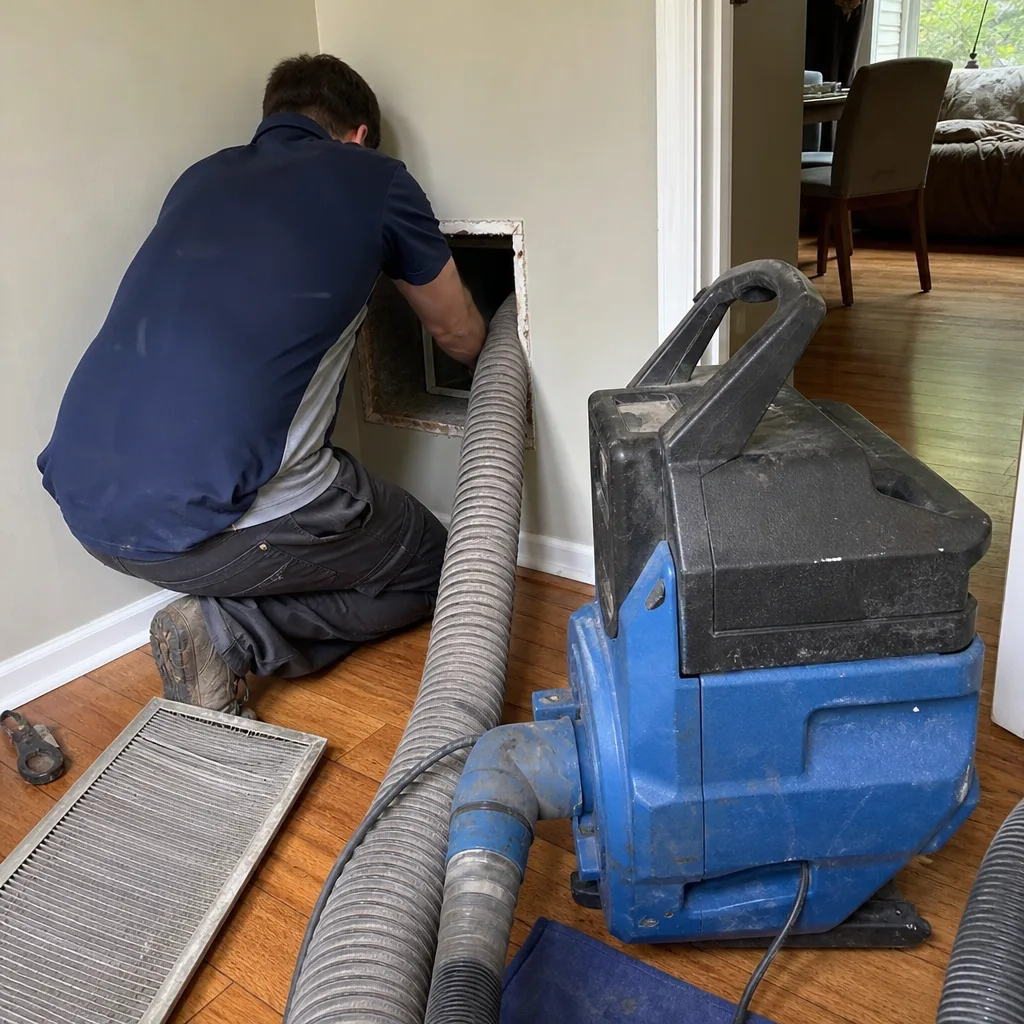 Before
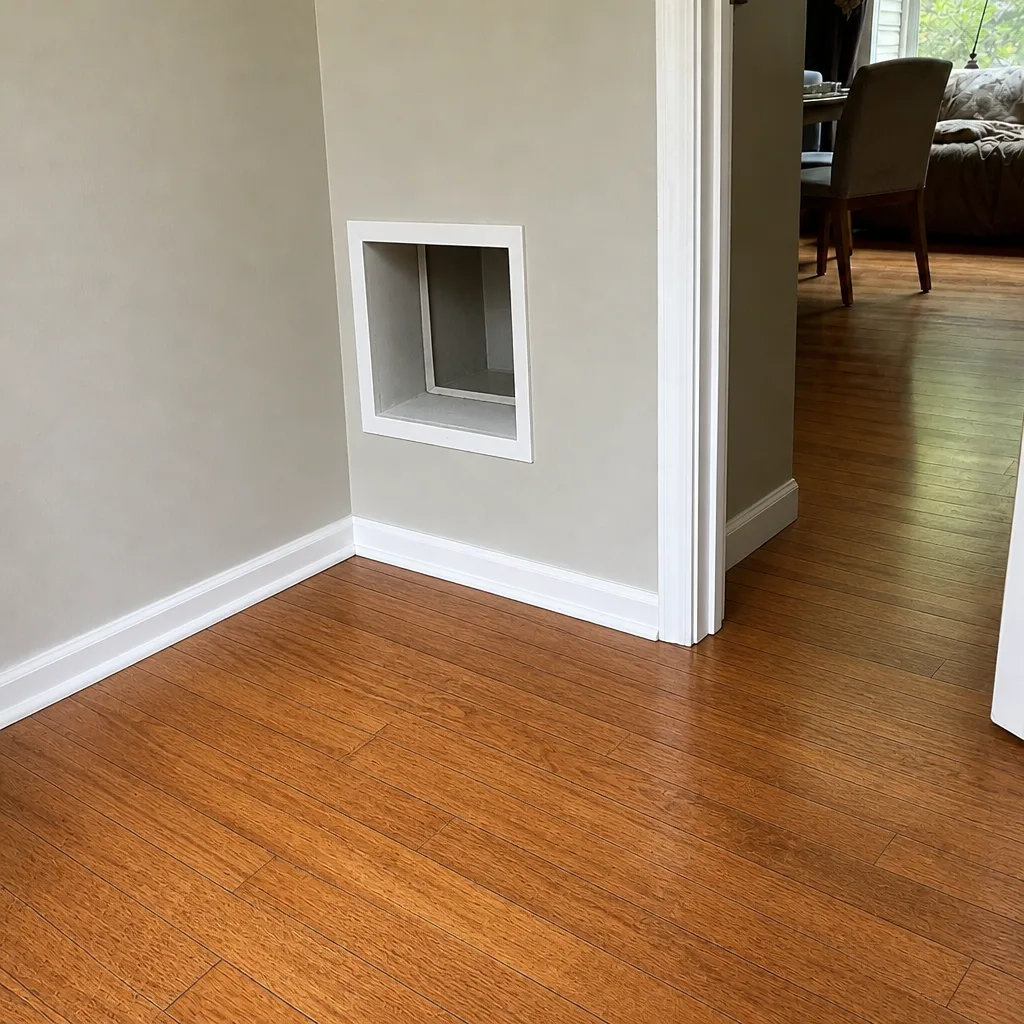 After
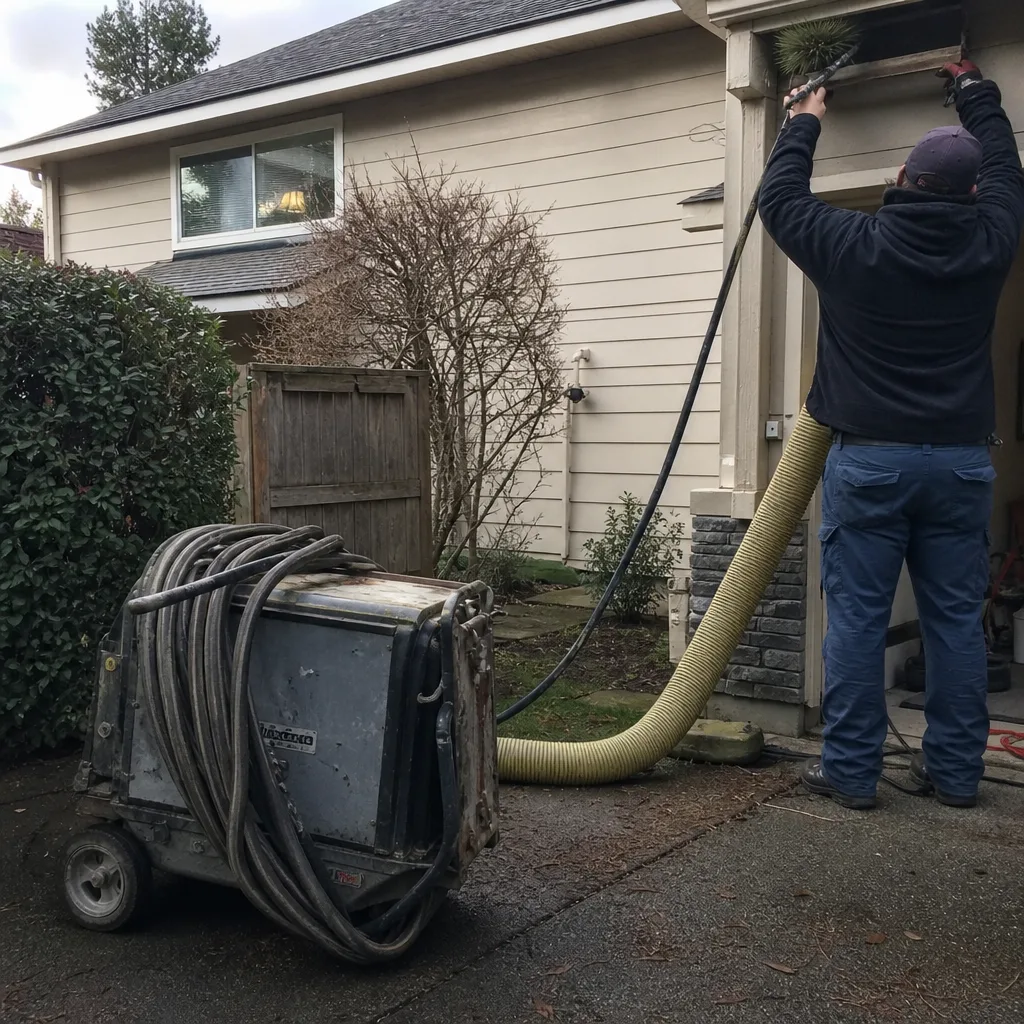 Before
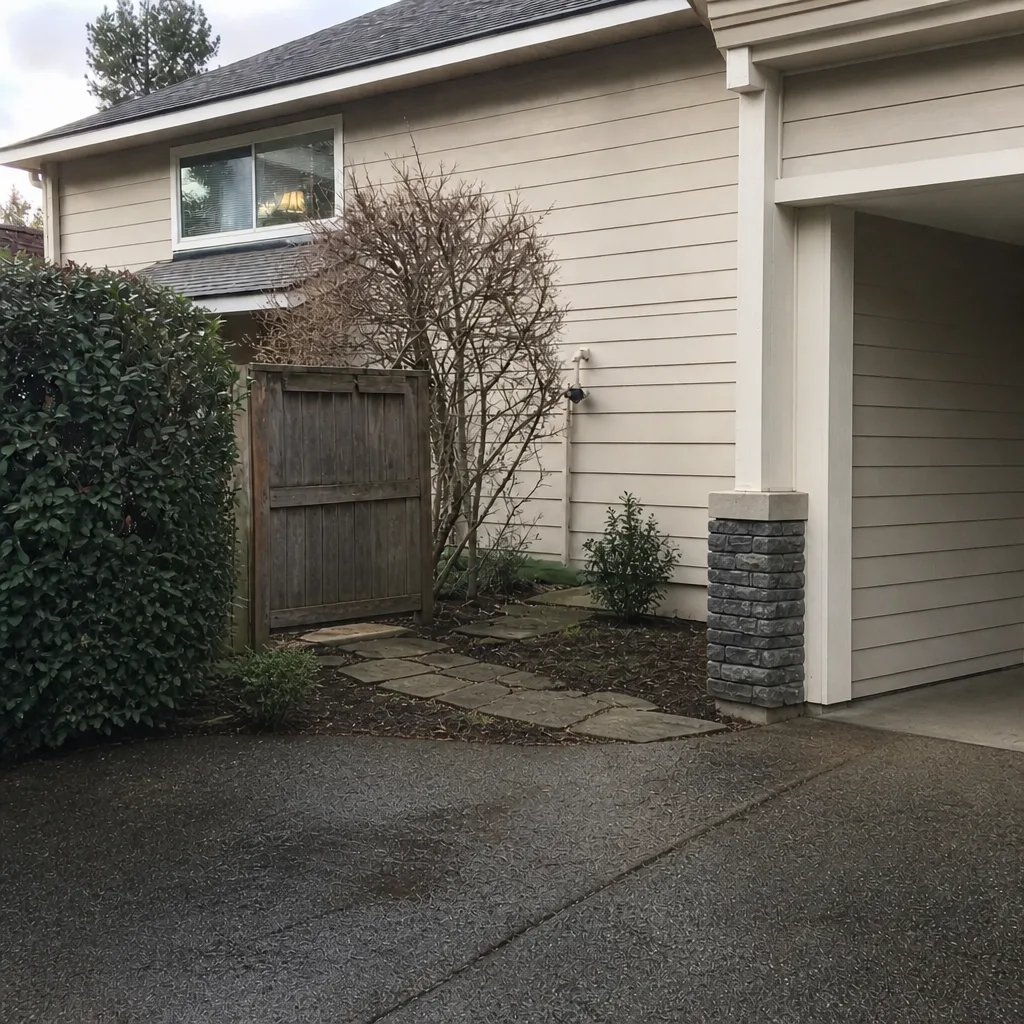 After
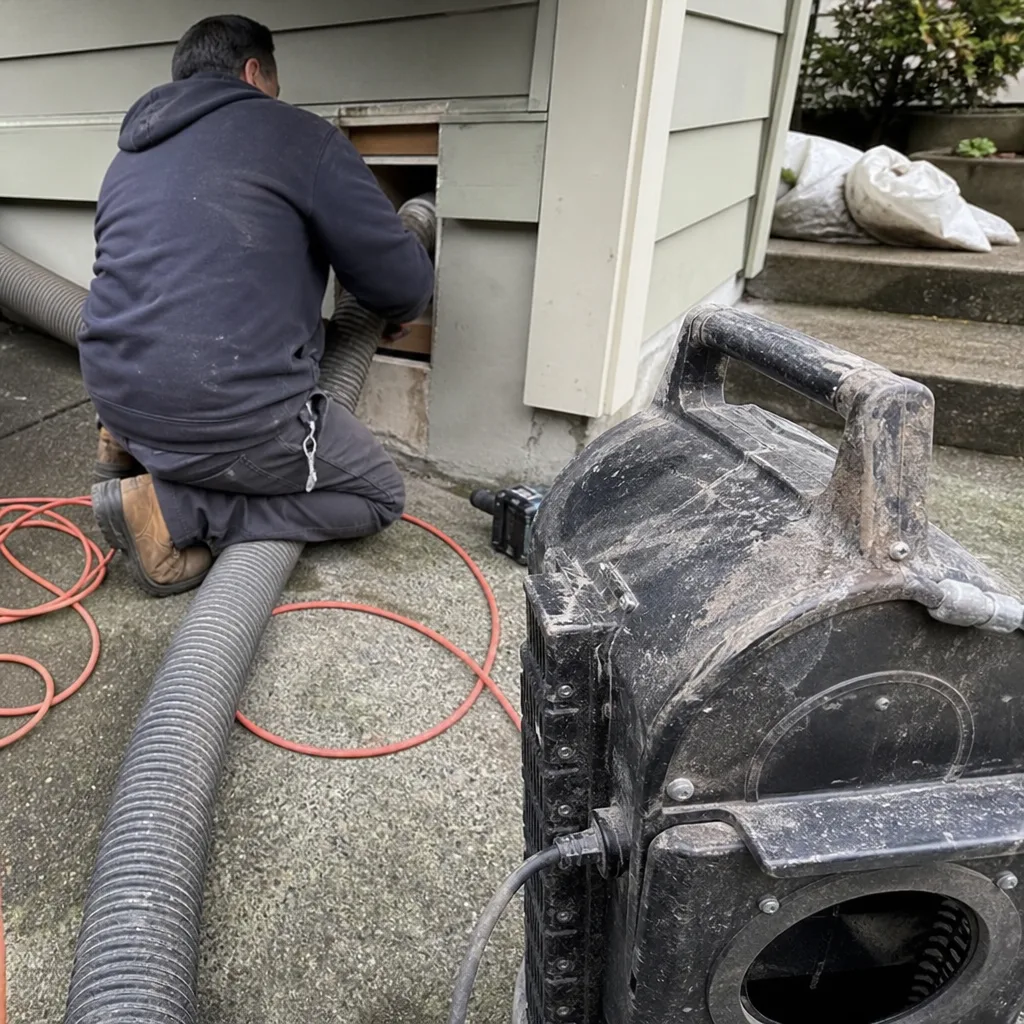 Before
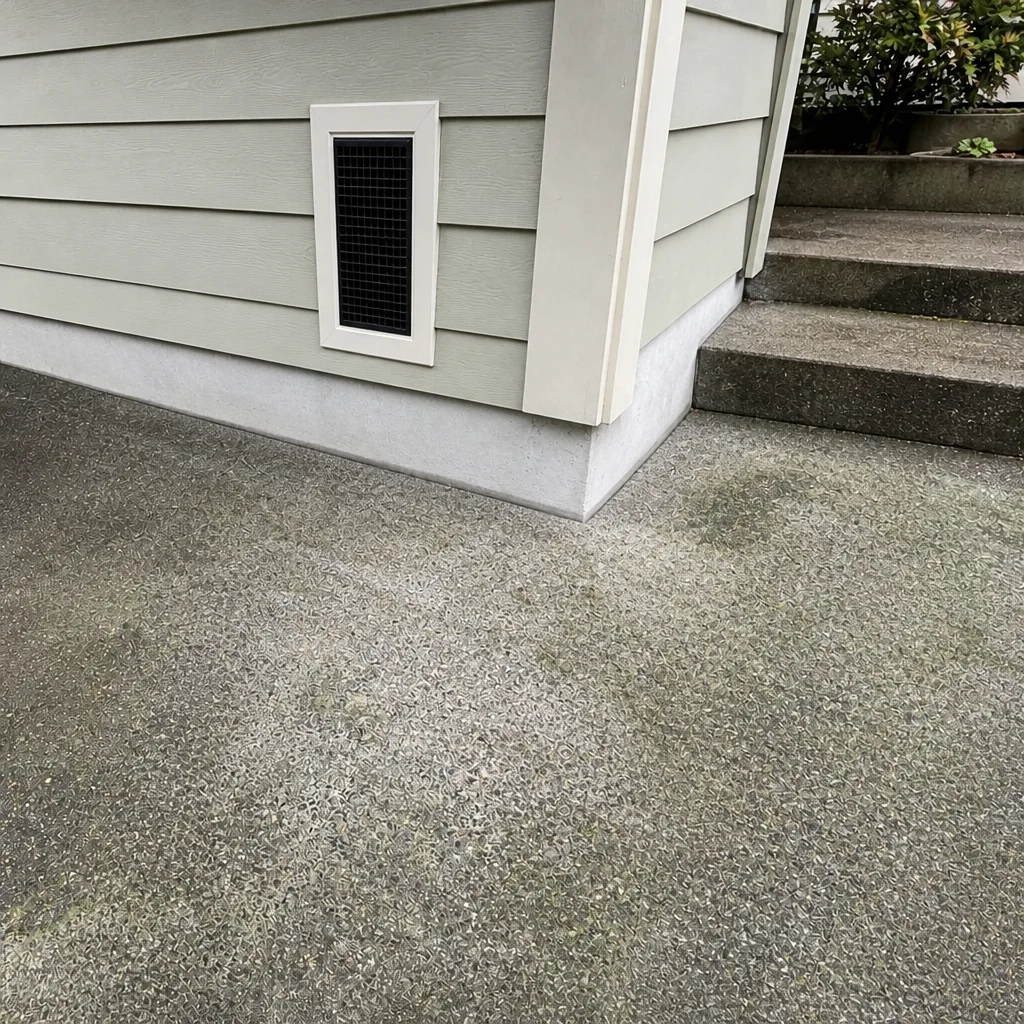 After
When to Call a Professional
Call a professional when you notice any of the following: dark film on return grilles that won’t wipe clean, recurring musty odor from floor vents during heating season, visible condensation on accessible ductwork, persistent airflow imbalance between rooms, recent renovation or water damage, fine dust settling faster than normal on surfaces, an unexplained uptick in allergy-type reactions in the household, or a home you’ve just moved into where duct history is unknown. If you’re unsure, an inspection is still the right step – it either confirms the problem or clears your system, and either outcome tells you what to do next. Bellevue Air Duct Cleaning Co offers free estimates in Bellevue – call (888) 845-6042.
Frequently Asked Questions
Most Bellevue homes need professional cleaning every 2-3 years, but the timing matters more than the frequency. Homes that undergo a remodel, have pets, run the HVAC system 10+ hours a day through smoke season, or have unsealed ductwork may need cleaning annually or on a hybrid schedule. Two professional inspections per year (spring and fall) plus your own filter changes is the practical baseline; the professional cleaning is scheduled around what the inspections find.
Yes. PM2.5 from Eastern Washington wildfire smoke crosses the Cascades and peaks in Bellevue during August and September. Those particles enter duct systems through return grilles, especially when the HVAC system is running continuously for cooling. Fall inspection after smoke season clears is the single most important seasonal step on the Bellevue calendar.
Mold precursor in ducts means the wet conditions that allow mold to develop, not visible mold itself. Signs include condensation or dampness on duct exteriors in crawl spaces, musty odor at floor vents, torn or sagging insulation on flexible duct runs, and dark spotting near duct penetrations in framing. Any of these warrants professional inspection – a cleaning services company with proper equipment can assess and address.
After. Final construction dust typically settles for one to two weeks after a remodel’s last day of work. Professional cleaning 1-2 weeks post-completion catches ongoing debris, while cleaning immediately at project end usually misses it and requires a second clean. During the project, change your HVAC filter every two weeks and tape over return grilles in the work area.
No. A shop vac can reach grilles and near-vent areas but can’t agitate settled particles inside duct runs or pull fine PM2.5-sized particulate under negative pressure. Professional systems (Rotobrush, Nikro) are built for the job because the physics require it – high-volume agitation plus negative-pressure extraction. Consumer-grade equipment does little beyond the surface.
A full-system visit combines duct cleaning, HVAC cleaning (coil, blower, air handler), duct repair and sealing when needed, and air quality/sanitizing if contaminants warrant it. Rather than coordinating separate contractors, one provider can address the whole system in a single coordinated schedule. That’s one of the reasons our five-service scope exists – cleaning without repair leaves the leaks that feed the next round of contamination, and cleaning without an air-quality step can leave residual contaminants in place.
The Bottom Line
Bellevue’s seasons don’t just change what’s growing in your yard – they change what’s accumulating in your ductwork. Fall is the post-wildfire-smoke window. Winter is the wet condensation window. Spring is the renovation and pollen window. Summer is the pre-cooling coil and drain pan window. Aligning professional cleanings and your own inspections to those patterns is more effective, and less expensive over time, than cleaning once a year regardless of season. Two professional visits per year, honest filter changes in between, and attention to what your vents are showing you are the practical foundation. Call (888) 845-6042 for a free estimate – we’ll walk through your home’s system and give you a specific plan for the year ahead, not a generic schedule.
Written by the team at Bellevue Air Duct Cleaning Co.